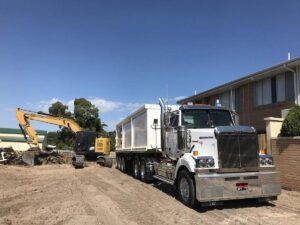
The cheapest rate on an equipment hire quote often turns into the most expensive mistake on a Victorian job site. While bare machinery rental might look cost-effective on paper, choosing wet hire, which pairs heavy earthmoving plant with an experienced operator, is what truly protects your schedule, site safety, and bottom line.
If you have ever felt uneasy about misjudging complex site cut levels, striking underground assets, or managing heavy equipment liabilities under WorkSafe Victoria regulations, you aren’t alone. Sourcing licensed, capable operators who turn up on time while shoulder-charging all the operational risk yourself can quickly derail any build.
In this guide, you will discover how wet hire works, compare the true financial and timeline differences against dry hire, and evaluate the smartest machinery solution for your Victorian earthworks project. We will walk you through local safety responsibilities, job site advantages, and how to confidently choose a dependable earthmoving partner across Melbourne and regional Victoria.
Key Takeaways
- Understand how choosing wet hire eliminates unexpected overheads by packaging heavy machinery, ticketed plant operators, fuel, and site safety into a single agreement.
- Uncover the real timeline and cost differences between dry hire and operated plant, highlighting how operator skill prevents expensive rework and delays.
- Identify which complex earthworks, from managing reactive Victorian clay to precision laser grading, require experienced operators at the controls.
- Learn how partnering with professional operators protects your site against WorkSafe Victoria liability, asset strike damage, and machine downtime.
- Review the vital checklist of competency verifications, insurances, and fleet maintenance records to inspect before booking an earthmoving team.
What Is Wet Hire? Understanding Operated Machinery Hire
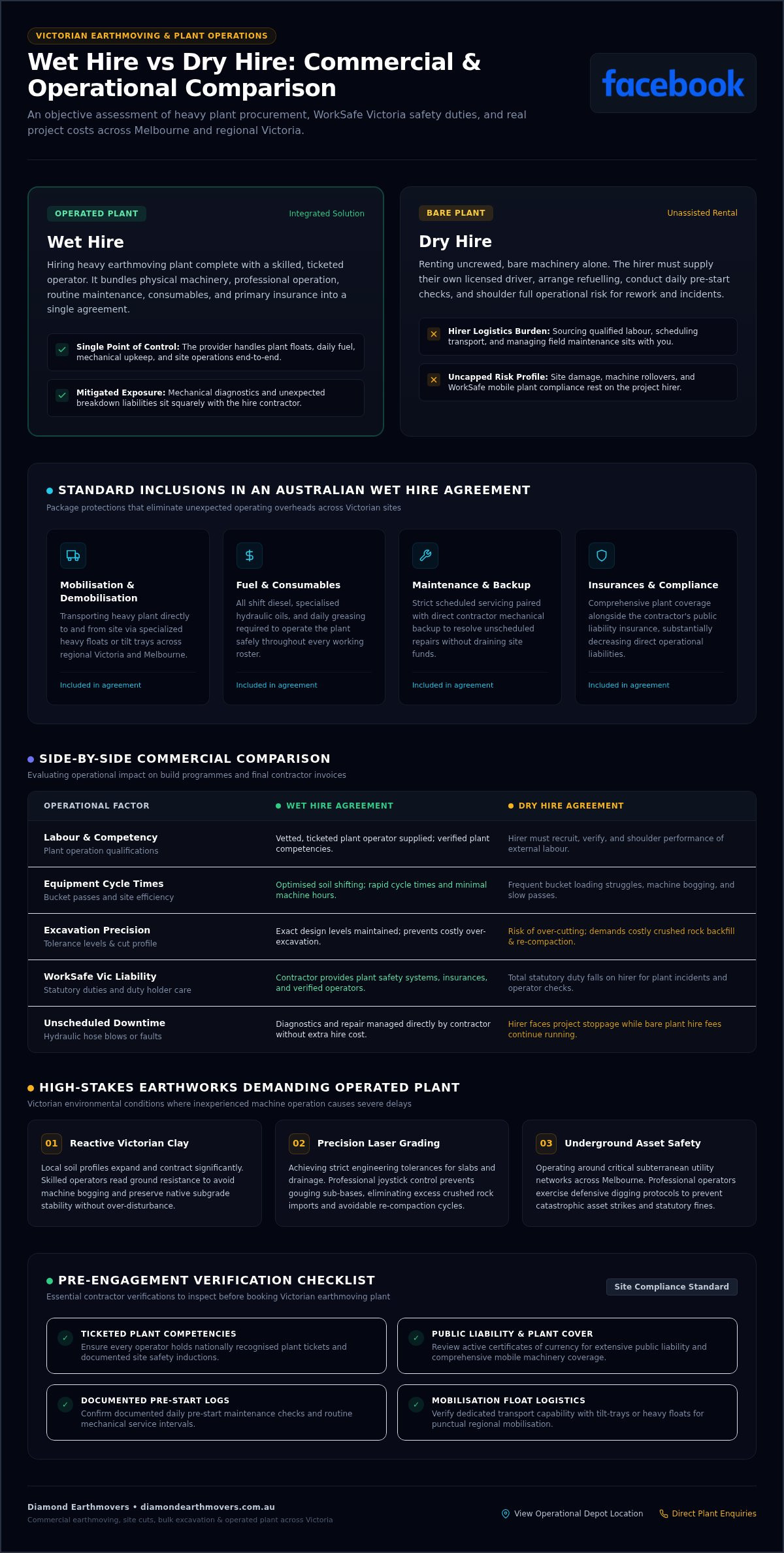
In the Australian construction and earthmoving sector, wet hire refers to hiring heavy machinery complete with a skilled, ticketed plant operator. Rather than simply renting bare equipment, you secure an integrated solution that bundles the physical plant, professional operation, scheduled servicing, and primary machine insurance into a single arrangement.
This operational model, globally categorised as operated equipment rental, removes the heavy logistical burdens of site cuts, bulk excavation, and grading. Instead of sourcing qualified labour, organising plant floats, and arranging fuel deliveries yourself, a single contractor manages the machinery end to end. It’s why civil developers, agricultural landholders, and residential builders across Victoria routinely rely on operated plant to guarantee site productivity and safety from day one.
The Standard Inclusions in an Australian Wet Hire Agreement
A comprehensive agreement protects your site budget by packaging critical operational overheads into your hourly or contract rate. Standard inclusions generally feature:
- Mobilisation and demobilisation: Transporting machinery to and from your property via heavy floats or tilt trays across Melbourne and regional Victoria.
- Fuel and consumables: All diesel, hydraulic oils, and daily greasing required to run the plant throughout the shift.
- Routine maintenance and mechanical backup: Scheduled servicing alongside immediate contractor support if unscheduled mechanical repairs arise.
- Insurances and safety compliance: Comprehensive plant insurance alongside the contractor’s public liability coverage, significantly reducing your direct exposure to operational risks.
Wet Hire vs Dry Hire: Core Conceptual Differences
The distinction between both hiring formats centres on control, competence, and risk allocation. Dry hire provides bare equipment alone. Under a dry hire contract, your team supplies the driver, fuels the plant, performs daily pre-start checks, and carries total liability for accidental damage or site rework.
Wet hire shifts those operational headaches to an experienced professional. You gain a vetted operator who understands equipment capabilities, site safety, and ground conditions. If a machine blows a hydraulic hose or experiences an electrical fault under wet hire, diagnosing and rectifying that issue sits squarely with the machinery provider, keeping your project moving forward without surprise expenses.
Wet Hire vs Dry Hire: Commercial Comparison for Victorian Projects
On paper, renting bare plant often seems like an easy way to reduce project expenses. In practice, the initial rate on a dry hire agreement reveals only a fraction of the true commitment. When you manage machinery on your own, you inherit significant logistical responsibilities, variable fuel bills, and the financial hazard of site rework. Choosing wet hire fundamentally rebalances that equation, pairing modern earthmoving equipment with trade expertise that protects your project schedule.
Productivity and Equipment Cycle Times
Skilled operators don’t just shift soil; they read the ground, work around challenging site constraints, and establish design levels in substantially fewer passes. An inexperienced operator behind the joysticks frequently battles inefficient bucket loading, machine bogging, and uneven grading. These mistakes often cause accidental over-excavation during site cut excavating, requiring expensive crushed rock backfill and extra compaction. An experienced operator maintains smooth cycle times, completing bulk earthworks cleanly while keeping machine hours to a minimum.
Safety, WorkSafe Victoria Compliance, and Risk Allocation
Operating heavy machinery carries strict workplace duties. As detailed in the WorkSafe Victoria plant health and safety guide, duty holders must maintain rigorous mobile plant safety systems, site hazard controls, and documented operator competencies. Bare dry hire transfers total responsibility for machine rollovers, mechanical damage, and on-site incidents directly to you. Professional wet hire contractors supply verified operators alongside extensive commercial public liability insurance, managing heavy plant risks so your site stays compliant and secure.
The True Financial Equation: Hidden Costs of Self-Operation
Calculating the real cost difference between hiring bare machinery and engaging an operated team requires looking at the hidden line items:
- Mobilisation fees: Heavy float transport to and from machinery depots across Melbourne adds direct overhead before work even starts.
- Fuel and wear charges: Refuelling heavy diesel tanks daily and managing consumable wear adds variable expenses that are already bundled into operated rates.
- Asset strike liabilities: Hitting unmarked utilities or damaging boundary structures leads to immense downtime and repair invoices.
When unexpected site delays, slow cycle times, and rectification work enter the picture, self-operation rarely delivers genuine savings. If you want practical guidance on equipment selection for your site, feel free to reach out to our friendly team to discuss your plans.
When Should You Choose Wet Hire Earthmoving Services?
Certain ground conditions and civil projects demand far more than basic machine operation. When site tolerances leave no room for error, or subsurface profiles present serious structural challenges, engaging operated machinery ensures work proceeds without compromise. Choosing wet hire proves decisive across several demanding project scenarios.
Precision Earthworks and Structural Site Preparation
Grading a building pad, shed slab, or access track requires sub-centimetre accuracy. If an operator cuts too deep, soft fill will settle unevenly over time, compromising foundations or triggering expensive concrete over-pours. Professional plant operators utilise laser-guided levels and years of tactile cab experience to establish exact subgrade heights on the first run. Whether preparing a site for residential foundations or executing detailed excavation across Melbourne, operated plant guarantees the ground holds structural integrity long after the machinery departs.
Agricultural and Rural Projects: Dams, Arenas, and Access Roads
Rural earthmoving presents unique technical demands. Sinking a farm dam isn’t just about scooping out dirt; it requires cutting a proper clay core keyway trench, compacting fill in staged lifts, and shaping spillways to prevent washouts. Similarly, constructing horse riding arenas demands precise multi-layered drainage falls so surfaces stay rideable year-round without pooling. For heavy vehicle access roads, experienced operators shape correct cross-falls and crowns, directing Victorian rainfall away from traffic corridors to prevent severe rutting.
Navigating Melbourne Soils and Subsurface Utility Risks
Melbourne is well known for reactive basalt clays that expand when wet and shrink during dry spells. Working this soil without assessing ground moisture can destabilise future slabs. In northern and western corridors, hidden basalt floaters can quickly snap excavator teeth and damage hydraulic systems. Selecting wet hire gives you the right machine tonnage and experienced touch to tackle heavy rock safely. Working under Safe Work Australia mobile plant standards, professional operators interpret service plans and spot buried pipes, preventing catastrophic underground utility strikes. For a deeper understanding of how civil site preparation and bulk earthworks methods have evolved to address these exact challenges, our detailed guide covers modern cut-and-fill strategies and soil balancing techniques suited to Victorian ground conditions.
How to Choose the Right Wet Hire Contractor in Melbourne
Selecting an earthmoving contractor shapes the safety and timeline of your entire build. Because soil conditions, suburban access constraints, and site cut requirements vary widely across Melbourne, bringing the wrong crew onto your property quickly leads to expensive delays. A structured vetting process ensures you partner with a professional team equipped to manage difficult ground smoothly from the first bucket.
Verifying Operator Qualifications and Safety Credentials
Reputable contractors gladly demonstrate that their team is fully qualified. Under Victorian safety frameworks, you should check documented operator competence, such as a formal Verification of Competency (VOC) or plant qualifications, alongside a current White Card. Always confirm the business carries substantial public liability insurance tailored to heavy civil earthmoving, and ask to review their site-specific Safe Work Method Statements (SWMS) so you know their safety protocols match your site hazards. For a comprehensive breakdown of exactly what to verify before signing any agreement, our guide to hiring excavating contractors in Melbourne walks you through every credential, insurance, and scope item to confirm.
Assessing Plant Fleet Capability and Specialised Attachments
Matching the right machinery to your specific scope is essential for continuous progress. Determine whether the contractor maintains a versatile fleet of precision graders, heavy excavators, and tippers suited to your site preparation, driveway build, or bulk dig. Check whether they supply specialised attachments like hydraulic rock breakers, tilt buckets, and rippers. Detailed machine maintenance logs provide peace of mind that plant won’t blow hydraulic hoses or leak fluids across your freshly graded ground.
Key Questions to Ask Before Signing a Work Agreement
Clear communication up front prevents commercial surprises once machines arrive on site. Before confirming your wet hire booking, run through these essential questions:
- How do you calculate mobilisation? Clarify whether depot-to-site float fees are charged as a flat travel rate or bundled into your initial shift hours.
- How are weather delays and stand-downs handled? Establish clear terms for rain interruptions, muddy ground conditions, and site cancellation notices.
- What is your procedure for locating buried assets? Ensure the team systematically reviews underground utility plans and hand-proves sensitive pipes and cables before putting bucket teeth into the dirt.
Partnering with Diamond Earthmovers for Expert Wet Hire Across Victoria
Getting your ground preparation right sets the standard for every trade that follows. At Diamond Earthmovers, we believe superior earthworks come from combining modern, high-performance plant with experienced operators who take personal pride in their tradecraft. We specialise exclusively in operated equipment, giving Victorian property owners and builders the confidence that their project will be completed smoothly, accurately, and safely.
Family-Run Commitment and Unrivalled Workmanship
Our business is family-owned and operated by Steve, Jayden, and Claire Diamond. When you work with us, you aren’t dealing with a detached hire desk or rotating subcontractors; you get direct accountability from people who genuinely care about the final grade. We approach every site with honest advice, practical planning, and a calm, solution-oriented mindset. You can locate our central Melbourne base and service footprint via the Diamond Earthmovers Google Map.
Every operator on our team understands the practical realities of Victorian geology. We carry comprehensive public liability insurance, enforce strict site safety protocols, and maintain clear communication from the initial site inspection to final sweep-up. You never have to worry about unexpected logistical hurdles or missed project deadlines.
Specialised Earthmoving Solutions Tailored to Your Property
Our fleet features precision graders, excavators, and heavy earthmoving plant configured with advanced attachments and grade controls. We bring specialist wet hire capabilities to a diverse range of residential, civil, and rural projects across Victoria, including:
- Excavation and site cuts: Detailed foundation preparation, basement digging, and bulk earth movement delivered to exact engineering specifications.
- Demolition Victoria: Safe, systematic structural clearing and site preparation that complies fully with environmental standards.
- Dam builds and repairs: Robust rural water storage built with proper keyway trenching and clay compaction.
- Driveways and access roads: Heavy-duty vehicle access routes constructed with correct crowning, drainage swales, and stable sub-bases.
- Grader hire Melbourne: Laser-accurate final trim grading for pads, civil roads, and commercial yards.
- Horse riding arenas and yards: Precision-graded equestrian surfaces featuring tailored drainage layouts and quality sub-bases.
- Rock retaining walls: Durable, structurally sound stone walls that stabilise embankments while enhancing property layout.
Whatever the scale of your upcoming project, our experienced team is ready to help you plan and execute your earthworks without the stress of dry plant management. Start the conversation with our operators today through the Diamond Earthmovers Contact Page.
Build with Certainty on Your Next Victorian Earthworks Project
Achieving clean, stable earthworks comes down to operator precision, proactive site safety, and avoiding the costly downtime of bare plant rental. Choosing professional wet hire ensures your levels stay exact, underground assets remain protected, and your overall project timeline holds firm without unexpected mechanical overheads or compliance headaches.
At Diamond Earthmovers, our family team, led by Steve, Jayden, and Claire Diamond, brings decades of practical trade experience to every stage of your build. From complex rural dam construction and precision equestrian arenas to detailed civil excavations, our fully insured fleet and strict WorkSafe Victoria compliance give you complete peace of mind on site.
With skilled hands at the controls from day one, your ground will be prepped cleanly, efficiently, and built to support your project for years to come.
Frequently Asked Questions
What is the main difference between wet hire and dry hire?
The main difference is that wet hire provides heavy machinery together with a qualified operator, while dry hire supplies the bare equipment alone. Under a wet hire agreement, the contractor assumes responsibility for operating the machine, burning fuel, daily greasing, and managing primary plant insurance. Dry hire leaves all operational tasks, operator sourcing, safety compliance, and mechanical breakdown risks directly on the hirer.
Is wet hire more cost-effective than dry hire for private property earthworks?
Yes, wet hire is generally far more cost-effective for private property projects because skilled operators complete bulk digging and precision levelling significantly faster. While dry hire displays a lower baseline daily rate, hiring bare plant introduces separate float fees, heavy diesel bills, and high insurance excess deposits. Inexperienced self-operation often leads to accidental over-excavation, resulting in costly crushed rock remediation and prolonged hire durations that erase initial savings.
Who is legally liable if machinery is damaged during wet hire operations?
The machinery contractor carries the primary legal liability for plant damage or mechanical breakdowns during wet hire operations. Because their employed, ticketed driver controls the equipment, the hiring contractor covers machine repairs through their comprehensive commercial plant policy. If you opt for bare dry hire instead, your business or household remains fully liable for accidental rollovers, bent hydraulic rams, panel scratches, and expensive equipment recovery fees.
What qualifications and tickets should a wet hire plant operator hold in Victoria?
In Victoria, plant operators must hold documented proof of competency, such as a formal Verification of Competency (VOC) or nationally recognised civil construction plant qualifications, alongside a valid White Card. While general earthmoving licences are no longer issued by the state government, responsible contractors ensure their drivers carry relevant high-risk work licences for specialised tasks and operate under site-specific Safe Work Method Statements that satisfy WorkSafe Victoria standards.
Does wet hire include fuel, transport, and equipment maintenance costs?
Yes, standard wet hire agreements routinely package fuel, routine servicing, mechanical wear, and operator wages into a single hourly or fixed project charge. Float transport to mobilise heavy plant from Melbourne depots is typically billed as an upfront travel fee or incorporated into a minimum shift booking. Unlike bare rental arrangements, you won’t encounter unexpected line items for hydraulic oil, filters, or daily diesel refuelling.
Can I hire an excavator with an operator for tight-access residential digging?
Yes, you can hire compact machinery alongside experienced operators specifically geared for narrow residential blocks across Melbourne. Contractors utilise compact, zero-tail-swing excavators and tracked mini loaders designed to pass through garden gates and boundary easements safely. An experienced operator manoeuvres inches away from boundary fences, brick piers, and house footings without risking costly structural damage or destabilising adjacent domestic structures.
How do wet hire contractors handle underground pipes and electrical cables?
Professional contractors manage underground utility hazards by obtaining Before You Dig Australia asset plans before any ground is broken. Experienced operators review pipe depths, identify critical service zones, and carefully hand-pothole or hydro-excavate sensitive telecommunications, water mains, and gas lines prior to mechanical digging. This meticulous process ensures live utilities remain protected, preventing dangerous service interruptions and expensive emergency utility repair bills on your property.