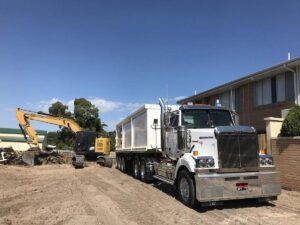
Crushed rock driveways can develop ruts or loose patches if the ground beneath them, drainage or material choice does not suit regular vehicle use. Choosing the right surface involves more than picking a finish that looks good. Preparation, compaction and how water moves across the site all affect the result.
If you are weighing up crushed rock for a Melbourne property, consider how it may perform in wet weather, on a slope and under the vehicles that will use it. The right approach depends on the site as well as the driveway’s intended use.
This guide compares crushed rock with gravel, stabilised surfaces and bitumen, and explains how ground conditions, drainage and traffic can affect performance. It also covers practical details to discuss with a contractor, including site preparation, access and the finish that suits your needs. Diamond Earthmovers is a Melbourne-based, family-operated earthmoving business providing driveway and access-road services across Victoria. You can view Diamond Earthmovers on Google Maps while considering who to speak with about your property.
Key Takeaways
- Crushed rock driveways can suit longer driveways and practical vehicle access, but the right finish depends on your property and how you will use it.
- Compare crushed rock, stabilised surfaces, gravel and bitumen by appearance, upkeep and intended use before choosing an option.
- Ground condition, compaction, driveway shape and drainage all influence how well the surface performs, particularly after rain.
- Before speaking with a contractor, note the driveway length, existing surface, site access, water movement and the vehicles that will use it.
- Diamond Earthmovers provides driveway and access-road services across Victoria. View Diamond Earthmovers on Google Maps.
What are crushed rock driveways, and where do they work well?
A crushed rock driveway uses broken, graded stone to create a practical surface for vehicles. The material is spread over a prepared area and may be compacted to form a firmer finish. This differs from loose decorative gravel, which is usually chosen for appearance and may shift more readily under tyres. The Crushed stone reference explains how crushed stone differs from naturally rounded gravel.
Crushed rock driveways can suit rural and semi-rural properties, longer accessways and entrances where vehicles need a functional route across the site. The material alone, however, does not determine how the driveway will look or perform. Ground conditions, preparation, vehicle use and water movement across the property all matter.
What does a crushed rock driveway consist of?
Crushed rock is aggregate processed into pieces and sorted by size. For a driveway, it can be spread and compacted so the pieces sit together more firmly than loose decorative stone. The material and finish can vary, so avoid choosing by appearance alone. Ask what is proposed for your site and how the surface will be prepared and compacted.
When might crushed rock suit a Melbourne property?
It may be worth considering for a long driveway, a rural or semi-rural property, or practical vehicle access where a hard, decorative finish is not essential. Think about how often vehicles will use the driveway, whether larger vehicles need access, and where they will turn or pass. The intended use helps shape the discussion about material and construction.
Every property needs its own assessment. Soft or uneven ground, slopes and places where water collects may affect how the driveway is prepared and how it holds up. Consider the entrance, turning areas and drainage together, rather than treating the driveway as just a strip of surface material. The chosen rock and quality of the work will also affect appearance and upkeep.
Diamond Earthmovers is a Melbourne-based, family-operated earthmoving business providing driveway and access-road services across Victoria, alongside excavation and grader hire. Discussing the site and intended vehicle use with an earthworks contractor can help clarify what needs attention before you select a finish. Get in touch about driveway and access-road work, or find Diamond Earthmovers on Google Maps.
Crushed rock driveway options in Melbourne: what should you compare?
Surface names can sound similar, but the material, how it is placed and the finish you want can change how a driveway feels and what upkeep it needs. Compare options against your property and vehicle use rather than choosing on appearance alone. Performance also depends on site conditions and construction, so ask the contractor to explain what they propose for your driveway.
| Option | Appearance | Typical use | Upkeep considerations | Questions for your contractor |
|---|---|---|---|---|
| Loose crushed rock | Visible, loose stone with a natural look | Practical access where a less-firm finish is acceptable | Material may shift under tyres and need attention over time | How will the surface be shaped and managed? |
| Compacted crushed rock | More settled and even than loose stone | Driveways needing a firmer aggregate surface | Ask how the ground will be prepared and compaction achieved | What material and construction approach suit my site? |
| Stabilised crushed rock | Aggregate finish intended to hold together more firmly | Projects where reduced movement is a priority | Requirements vary with the method and site conditions | What does “stabilised” mean for this project? |
| Gravel | Can range from rounded stone to angular aggregate | Access or driveway surfaces where the chosen gravel suits the use | Movement and upkeep depend on the material and placement | What type of gravel is proposed, and why? |
| Bitumen | Sealed, continuous surface | Driveways where a sealed finish is preferred | Discuss how the surface and water management affect future care | How will drainage and site preparation be handled? |
Crushed rock or gravel: what is the practical difference?
“Gravel” is often used broadly, while crushed rock generally refers to broken aggregate. Shape, size and how the material is placed influence surface feel and how readily stones move under traffic. Ask the contractor to identify the proposed material and describe the finished surface. For crushed rock driveways, intended traffic and your tolerance for ongoing surface attention are useful points to discuss.
When should you compare crushed rock with bitumen?
A gravel-based finish keeps the stone visible and may need periodic attention, while bitumen creates a sealed surface. Neither is automatically right for every property. Weigh vehicle use, appearance, drainage and the kind of future maintenance you are comfortable with. The Gravel Roads Construction and Maintenance Guide also explains how shaping, drainage and material selection contribute to gravel-road performance.
For a project-specific view, discuss your site and intended use with a driveway contractor. Diamond Earthmovers provides driveway and access-road services across Victoria. Contact Diamond Earthmovers about driveway work, or view its location on Google Maps.
Will a crushed rock driveway hold up? The role of ground, grading and drainage
It can, but the surface material alone will not determine how well it performs. A crushed rock driveway relies on suitable ground preparation, effective compaction and a surface shape that works with the property’s water flow. If the base is weak or water regularly collects across the accessway, vehicle traffic may loosen the finished surface or create ruts.
Crushed rock can provide a functional surface for vehicle access, and its construction can be planned around the site. There are trade-offs too. The surface may need periodic attention, with the amount of upkeep depending on traffic, weather, materials and ground conditions. No surface is maintenance-free on every property.
How do preparation and compaction affect the finished surface?
Before placing material, assess what is underneath. Existing soft spots, uneven ground or an old surface may affect how the driveway needs to be prepared. Compaction is also a key construction consideration because it helps settle the material into a more stable surface. The right approach depends on the site, so do not assume the same preparation will suit every driveway.
Excavation and grading requirements vary with the existing ground and planned access. For example, a driveway crossing uneven or disturbed ground may need different preparation from one on a more consistent base. Ask what work is proposed before the aggregate goes down, and how the contractor will account for intended vehicle use. If you want a broader understanding of what site preparation involves, the guide on earth works explained: what they involve and how to plan a project covers how soil type, existing contours and water movement shape the scope of work.
How should water movement influence driveway planning?
Look at the property during or after rain. Note where water flows, where it pools and whether it crosses the proposed driveway route. These observations can help identify drainage issues early. Plan the driveway’s shape and grading for the site, rather than leaving water management as an afterthought. For sloping ground where protective retaining structures and surrounding earthworks are needed to control runoff, visit Landscape By Design Of Palmetto to see examples of functional hardscape design.
Well-considered preparation and water management can support a more dependable result, but they do not remove the need to monitor the surface over time. If you notice water collecting or flowing across the route, raise it with an experienced earthworks contractor. Diamond Earthmovers provides driveway and access-road services, along with excavation and grader hire, across Victoria. A site discussion can help clarify what preparation and grading may be needed for your property.
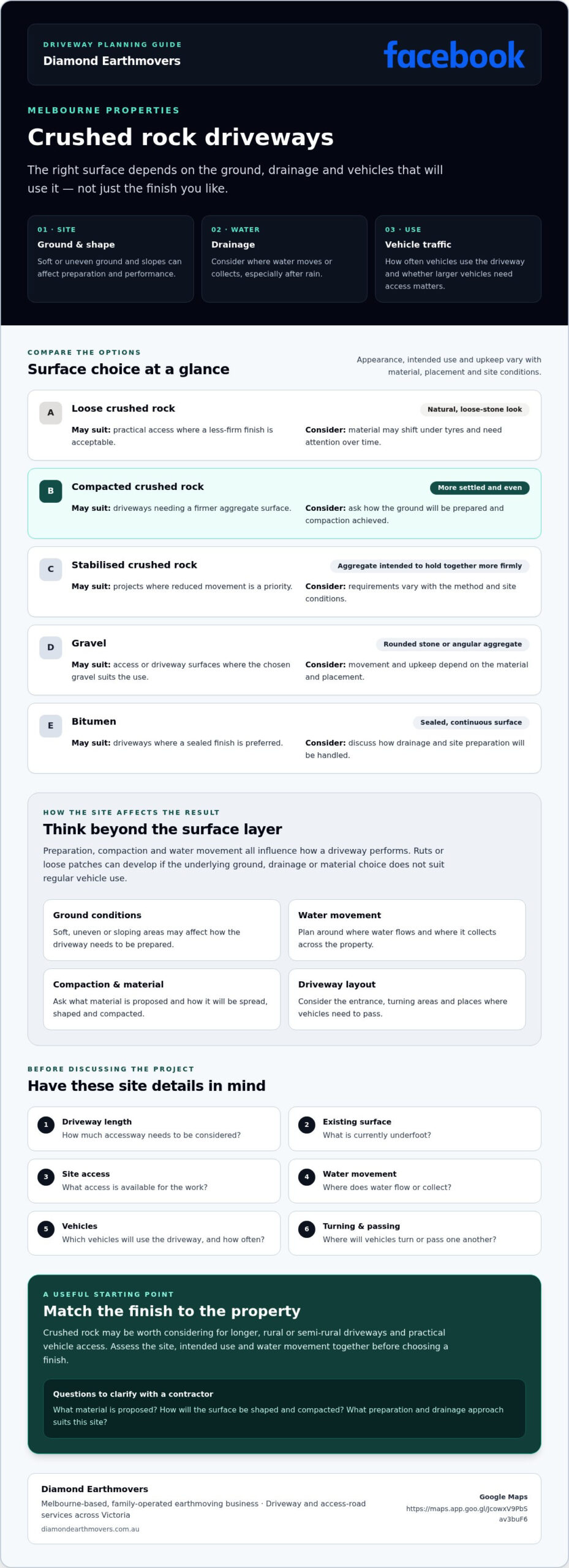
How to assess a crushed rock driveway project in Melbourne
A useful project discussion starts with how the driveway needs to work, then considers what the property requires. Before comparing finishes, gather a few details about the route and access. This gives a contractor a clearer picture of the job and keeps the conversation focused on practical decisions.
- Define the use: Note which vehicles will use the driveway and how often. Include turning areas, passing space or access for larger vehicles if relevant.
- Describe the site: Record the approximate length and layout, existing surface, steep sections and any access limitations for machinery or material delivery.
- Consider water: Identify places where water flows across the route or collects after rain, and mention any drainage concerns you have observed.
- Compare options: Discuss the finish you prefer and ask how the proposed material suits the ground and expected traffic.
- Clarify the scope: Confirm what preparation, grading, drainage work and finishing are included, and which tasks may sit with other trades.
What should you prepare before asking for a driveway assessment?
A simple sketch can show the driveway route, entry point and any turning areas. Add notes about the current surface, soft or uneven spots, steep sections and known water issues. If practical, take site photos from a few angles, including the entrance and places where water gathers. Photos help explain what you have noticed, but they do not replace a site assessment.
Be clear about the access you need. Regular car use differs from access that also needs to accommodate work vehicles, deliveries or other larger vehicles. Sharing these details helps a contractor consider the project as a whole, rather than focusing only on the visible surface.
What questions help compare driveway contractors?
Ask how the contractor will assess the existing ground and decide what preparation is required. Find out how grading and drainage will be considered for your site, what material and finished surface are proposed, and what work is included in the scope. Clarify who is responsible for tasks outside that scope. Clear answers make it easier to compare proposals based on the work involved, not just the surface name. If you are unsure how to evaluate proposals or what to include in a project brief, the guide on choosing earthmoving contractors for your project covers practical criteria for assessing experience, inclusions and site-specific considerations.
Diamond Earthmovers is a Melbourne-based, family-operated earthmoving business providing driveway and access-road services across Victoria. You can view Diamond Earthmovers on Google Maps while considering local contractor options.
Planning a crushed rock driveway with a local earthworks contractor
Crushed rock may be worth considering if you need practical vehicle access and are comfortable with an aggregate finish that may require periodic attention. Whether it suits your property depends on the ground, water movement, access requirements and intended vehicle use. A discussion with an earthworks contractor can help you understand what needs checking before you settle on a surface or scope of work.
Diamond Earthmovers is a Melbourne-based, family-operated business working across Victoria. Its services include driveways and access roads, excavation and grader hire. The next step is a site-specific conversation, not an assumption that one material or construction approach will suit every driveway.
What can a driveway earthworks contractor help coordinate?
For a driveway or access-road project, earthworks may involve assessing the existing surface, ground preparation and how the route will be shaped. Depending on the site and agreed scope, excavation and grader work may form part of the broader plan. Ask what the contractor will assess and which tasks are included, so you understand how the proposed work relates to your site. For background on the company’s excavation work, read about precision excavation services in Melbourne.
How do you move from comparison to a project discussion?
Start with the location and a clear outline of how you need the driveway to function. Share details such as the existing access, vehicles that will use it and any constraints that could affect the work. Raise drainage concerns, site preparation and your preferred finish early. These details help focus the discussion on the factors that matter for your property, while leaving room for the contractor to assess conditions on site.
It can also help to ask what material is being considered, how the finished surface is expected to look, and what work is and is not included. A clear explanation makes it easier to compare options and understand the proposed scope before deciding how to proceed.
Find Diamond Earthmovers on Google Maps
Take the next step towards a driveway that suits your property
The right surface depends on more than appearance. Compare options against your vehicle use and upkeep preferences, then consider how ground preparation, grading and water movement could affect the result. A site-specific discussion can help clarify what needs attention before you settle on a finish.
Crushed rock driveways may be a practical choice for some properties, but every site is different. Diamond Earthmovers is a Melbourne-based, family-operated business serving projects across Victoria, with services in driveways, access roads, excavation and grader hire. Share your location, access needs and intended use to start a focused conversation about the work involved. You can also find Diamond Earthmovers on Google Maps.
Frequently Asked Questions
What is a crushed rock driveway?
A crushed rock driveway uses crushed aggregate as its driving surface rather than a sealed finish such as bitumen. The material may be placed loose or compacted, depending on the project. Its appearance and performance depend on the material, construction and site. For crushed rock driveways in Melbourne, ask what finish is proposed and how ground conditions, drainage, preparation and the vehicles using the driveway will shape the approach.
Are crushed rock driveways suitable for Melbourne properties?
They can suit some Melbourne properties, including rural and semi-rural accessways, but suitability depends on the individual site. Consider the driveway layout, existing ground, water movement and expected vehicle traffic. A long access route or frequent use by larger vehicles may call for a different approach from a short residential entrance. Ask an earthworks contractor to assess the property and explain which options may fit your needs.
How do you stop a crushed rock driveway from becoming rutted?
Address the ground, construction and water flow, not just the visible surface. Subgrade condition, site preparation, compaction and grading can all affect how the driveway handles vehicle use. Water that pools or runs across the route may also contribute to surface problems. Ask a contractor to inspect areas where ruts are forming and explain how the proposed work would respond to those specific site conditions.
Do crushed rock driveways need maintenance?
They may need maintenance over time, depending on the material, construction, drainage and how often vehicles use the surface. The amount of upkeep varies by property, so ask what to expect for the proposed finish. Find out what signs to monitor, such as loose material or uneven areas, and discuss how water movement or regular traffic might affect the surface. Avoid assuming any driveway will remain maintenance-free.
Is crushed rock cheaper than a bitumen driveway?
There is no reliable answer without comparing the scope of work for your particular Melbourne property. Site preparation, access, drainage, ground conditions and the chosen finish can all affect the project. Ask for a project-specific assessment and compare what each option includes, from preparation through to the finished surface. This gives you a clearer basis for comparing proposals than a general price claim.
What should I ask a contractor about a crushed rock driveway?
Ask how the contractor will assess the existing ground, prepare the site, plan grading and account for water movement. Confirm the proposed material, the expected finished surface and what work is included in the scope. Explain how you will use the driveway and mention any access restrictions or drainage concerns. Clear answers help you compare proposals based on the work and its suitability for your property, not appearance alone.
Can a contractor assess an existing crushed rock driveway?
A contractor can discuss the condition of an existing driveway and the factors that may need attention, such as surface wear, drainage or uneven areas. The appropriate work depends on the site and agreed scope. Share the driveway’s history and any recurring problems so these can be considered in the discussion. Melbourne-based Diamond Earthmovers provides driveway and access-road services. View its location on Google Maps or contact the team about driveway work.