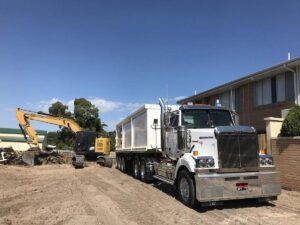
What if the success of earth works depends less on how much soil is moved and more on what the finished site needs to do? Whether you’re preparing access, shaping levels or improving drainage, a good plan starts with understanding the ground and the intended use. For Melbourne property owners, that means looking at the site itself before settling on the work.
It’s easy to think of earthworks as simply digging, filling or levelling. In practice, soil type, existing contours, water movement and machinery access all influence the scope. Getting those details clear before work begins can help you avoid a plan that looks straightforward on paper but doesn’t suit the property.
This guide explains common earthworks activities and how they shape a property, from excavation and grading to dam works, access roads and retaining walls. You’ll also learn what site information to gather, which project questions to raise in Victoria, and how to prepare for a useful conversation with an earthmoving contractor. With a clear brief and a sound understanding of site conditions, you can make more informed decisions before work begins.
Key Takeaways
- Plan earth works around the site’s purpose, ground conditions and desired finished result, not just the volume of soil to move.
- Project stages can include defining the outcome, assessing the site, planning the work, carrying it out and reviewing the result. The exact steps depend on the job.
- Match the work to your goal, whether that means preparing a site, shaping levels, improving access, building or repairing a dam, or preparing an equestrian facility.
- Before planning, note your goals, site details and access constraints. Check which approvals or requirements may apply to your project and location.
- Diamond Earthmovers is a family-operated Melbourne business serving projects across Victoria. View Diamond Earthmovers on Google Maps.
What do earth works involve, and why does the site matter?
Earth works reshape or prepare land for a specific use. The scope depends on the existing ground, the intended outcome and how the finished area needs to function. A flat block, sloping paddock and dam site can need different methods, even if each project involves moving soil.
The term describes a broad category of work, not one particular machine task. Earthworks are engineering works used in projects such as roads and dams, and may involve excavation and fill. In practice, the right combination depends on what needs to change and what the site can support.
What is included in earth works?
Common activities include:
- Excavation: removing soil or other material to create space or reach a required level.
- Cutting and filling: taking material from higher areas and using suitable fill to build up lower areas.
- Grading: shaping the ground to form planned levels and contours.
- Ground preparation: getting an area ready for its next use.
Projects often combine several activities rather than relying on one method. Preparing an access route, for example, may involve cutting into a slope, placing suitable fill and grading the surface. Shaping a dam site can also require a combination of excavation and ground shaping. The specific scope depends on the land and project plan.
How does the intended use shape the work?
Each use calls for a different finished surface. An access road needs levels and a surface suited to vehicle movement. Dam works shape the site for its intended water-storage use. A riding arena needs a prepared area suited to equestrian activity, while a building site must be shaped to suit the planned structure and its requirements.
Existing slopes, soil and other ground conditions influence how target levels can be reached and what preparation may be needed. Describe the end use before deciding on the work. For driveway-specific drainage considerations, see our driveway drainage guide.
Diamond Earthmovers is a family-operated Melbourne business working on projects across Victoria, including access roads, dams and riding arenas. View Diamond Earthmovers on Google Maps.
Earthworks: from site assessment to finished ground
A clear process helps turn a broad idea into a workable scope. The exact steps vary with the project, site conditions and available plans, but it’s useful to move from defining the outcome to checking the finished ground. This practical overview aligns with The Process of Earthwork Construction, while recognising that each site needs its own approach.
What should a site assessment establish?
Start by gathering information that explains the site and the intended result. Identify property boundaries, machinery access, existing ground levels and how the finished space will be used. Note changes in slope and areas where surface conditions appear different. Soil and ground conditions can affect the work approach, so don’t assume a method used elsewhere will suit your property.
If conditions are unclear or you’re unsure how to interpret a project requirement, seek appropriate specialist advice before settling on the scope. A clear picture at the outset makes it easier to discuss the job and identify questions to resolve before work begins.
Why do levels and drainage need early consideration?
Ground shape influences where water can flow and whether the finished area works as intended. A local low spot might be part of a wider slope or site-level issue, so consider how proposed levels relate to surrounding ground rather than treating one area in isolation. For driveway-specific drainage advice, see the related Melbourne driveway drainage guide.
A practical planning sequence:
- Define the outcome. Describe what the area needs to do when the work is complete.
- Assess the site. Record boundaries, access, existing levels and visible ground conditions.
- Plan the work. Use the intended use and available site information to establish a suitable scope.
- Carry out the work. Complete the agreed activities, adjusting the approach if site conditions call for it.
- Review the result. Check the finished ground against the intended use and agreed plan.
This is a guide, not a universal formula. Earth works for a driveway, dam or building site may require different checks and activities, and the sequence can change with site conditions. Reviewing the result against the original purpose helps establish whether the finished area is ready for its next use.
If you’re weighing up a site-specific scope, you can discuss your project with the Diamond Earthmovers team. Find Diamond Earthmovers on Google Maps.
Which earthworks activities suit different Victorian projects?
The right mix of earth works depends on the project’s purpose and the site’s existing levels, slope, access and ground conditions. A plan for an access road won’t automatically suit a dam, riding arena or building site. The examples below are starting points for identifying what to discuss for your Melbourne or regional Victorian property, not interchangeable scopes or guaranteed requirements.
How do earth works differ across property projects?
Consider what the finished area needs to support. Access works focus on creating a route for vehicles; dam works shape land for water storage; equestrian facility preparation considers the intended riding use; and general site preparation gets land ready for its next purpose. Each can call for different finished levels, access arrangements and surface considerations, depending on the site.
- Preparing a site: Clearing or reshaping an area may involve excavation, filling or grading. Ask what needs to be ready for the next stage and how the existing ground affects the scope.
- Grading land: Adjusting the ground’s shape can help achieve planned levels or contours. Ask how slopes and adjoining areas affect the intended finished surface.
- Creating access: An access road or driveway may need ground shaping to form a usable route. Consider where vehicles need to travel and what site constraints could affect the alignment.
- Dam works: Building or repairing a dam involves work shaped by the site and its water-storage purpose. Clarify the intended outcome and which site conditions need further assessment.
- Preparing an equestrian facility: Arena or yard preparation should reflect how the area will be used. Discuss the desired levels, access and surface requirements rather than assuming another site’s approach will fit.
When might grading, excavation or retaining work be relevant?
Excavation removes material to create space or lower an area. Grading reshapes the ground to achieve planned levels or contours. Retaining work may be considered where a project involves managing a change in ground level. Slope, existing levels and intended use all influence which activities may suit the site. Have the scope assessed for the individual property rather than assuming what is needed in advance.
Diamond Earthmovers works on projects across Victoria, including excavation, access roads, dams, horse riding arenas and rock retaining walls. For more detail about excavation, read this precision earthworks and excavation guide. If you have a project-specific question, contact the Diamond Earthmovers team to discuss it. You can also find Diamond Earthmovers on Google Maps.
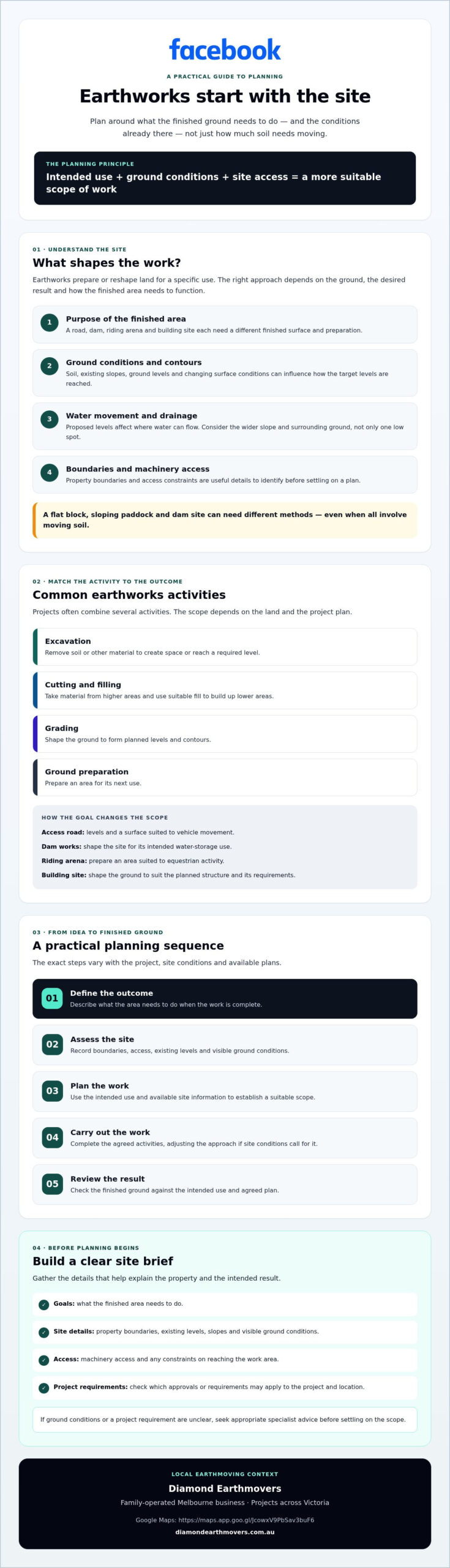
What should you check before planning earth works?
A useful project discussion starts with a clear goal and an honest picture of the site. Before settling on a scope, gather the details you have and note what still needs checking. This gives a contractor a clearer understanding of the job and gives you a basis for discussing levels, drainage and the finished use.
What information helps a contractor understand the job?
Prepare a short brief with the property location, what you want the work to achieve and any known site constraints. Include practical access details, such as narrow entry points, steep sections or areas where vehicle movement may be limited. Available plans, measurements and site photographs can help explain the property, but they don’t replace assessing the site itself.
Use the first discussion to clarify the scope and how the work may be organised. Questions worth raising include:
- Which activities are being considered, and what is outside the proposed scope?
- How will the intended use guide finished levels and the approach to drainage?
- What site conditions or access issues could affect the work?
- How will changes or unexpected conditions be communicated?
- How will the completed work be reviewed against the agreed outcome?
Clear answers help you understand not just what may happen, but why a particular approach is being considered. If a detail is uncertain, flag it early rather than assuming it will be resolved once work starts.
How can you prepare for local project requirements?
Requirements can depend on the work proposed and where the property is located. Check with the relevant local authority or a suitably qualified adviser before work begins, and confirm which approvals or other requirements apply to your specific project. Don’t rely on a neighbour’s experience as confirmation that the same process applies to your site.
For driveway planning, Diamond Earthmovers’ durable driveways and access roads guide offers related information. When comparing contractors in Melbourne, look for a clear explanation of the proposed scope, communication and how the finished work will be checked. The earthmoving contractor selection guide can also help you consider what to ask when assessing a team.
Diamond Earthmovers is a Melbourne-based, family-operated business serving projects across Victoria. View Diamond Earthmovers on Google Maps.
How can a Melbourne earthworks team help turn a plan into a project?
A well-defined project starts with a clear purpose, a realistic understanding of the site and an agreed scope of work. An earthworks team can discuss how those elements relate, identify information that may need clarification and explain which activities could suit the project. The final approach still depends on the property and the work required.
Diamond Earthmovers is a family-operated Melbourne business serving projects across Victoria. Its work includes excavation, dam builds and repairs, driveways and access roads, horse riding arenas and yards, rock retaining walls, and grader hire. These are distinct services, so the right fit depends on what you’re planning rather than assuming every earthmoving project needs the same work.
What earthworks projects does Diamond Earthmovers handle?
For a property owner planning an access route, the relevant discussion may centre on a driveway or access road. A water-storage project may involve dam construction or repairs, while a riding facility may call for work on a horse riding arena or yard. Excavation, grader hire and rock retaining walls may also be relevant to particular projects, depending on the proposed scope and site conditions.
Be specific about the result you’re seeking. A concise brief can help distinguish the main work from related tasks that may need separate advice or a different provider. Diamond Earthmovers’ services include the activities listed above. Don’t assume other forms of site work are included unless they’re discussed and confirmed for your project.
What is a useful next step for a Victorian property owner?
Before making an enquiry, note the property location, intended use, access details and any known constraints. Include available plans, measurements or photographs if they help explain the site, and list the questions you want answered. Ask how the proposed scope relates to finished levels, drainage and the way you plan to use the area. This gives both sides a practical starting point for discussing the job.
A clear conversation can help establish what information is still needed and whether the work matches the contractor’s services. It doesn’t replace checking any project-specific requirements with the relevant authority or adviser.
Find Diamond Earthmovers on Google Maps
Plan your site with the end use in mind
Good earth works start with a clear picture of what the finished site needs to do. Existing levels, access and ground conditions help shape the scope, while the intended use guides which activities may be suitable. Gathering site information and clarifying the project goal can make conversations with a contractor more focused.
Diamond Earthmovers is a family-owned and operated Melbourne business serving projects across Victoria. The team’s work includes dams, riding arenas, access roads and excavation. If you’re preparing a project brief, note the property location, the outcome you’re after and any known site constraints. Check project-specific requirements with the relevant authority or adviser before work begins.
Find Diamond Earthmovers on Google Maps
With a clear goal and the right site details, you’ll be better placed to plan the next step with confidence.
Frequently Asked Questions
What are earth works?
Earth works are activities that reshape or prepare land for a particular use. Depending on the site and intended result, they may include excavation, cutting, filling, grading or other ground preparation. A driveway, access road, dam or riding arena can each call for a different combination. Existing ground conditions and desired finished levels help determine the scope, so there’s no single method that suits every property.
What is the difference between earthworks and excavation?
Earthworks is the broad term for preparing or reshaping land, while excavation is one activity within that broader scope. Excavation involves removing soil or other material, for example to create space or lower an area. A project may also involve cutting, filling or grading to achieve the planned shape and levels. Which activities are appropriate depends on the site and what the finished area needs to do.
How do earth works affect drainage?
Earth works can change ground levels and contours, which influences how water moves across a site. Plan levels with the whole property in mind rather than treating a low spot in isolation. The intended use and surrounding ground also matter. For a driveway, consider drainage as part of the overall design rather than an afterthought. Site-specific drainage decisions may require advice from a suitably qualified professional.
Do I need a site assessment before earth works begin?
A site assessment helps establish the existing conditions and the work needed to reach your intended outcome. It can consider property boundaries, machinery access, current ground levels, visible surface conditions and how the finished area will be used. Plans or photographs can help explain the site, but they don’t replace assessing it directly. If ground conditions or project requirements are uncertain, ask whether specialist advice is needed before confirming the scope.
How do I know which earthworks contractor to choose?
Look for a contractor whose services match your project, and ask for a clear explanation of the proposed scope, sequence and communication. Discuss how the work relates to the intended use, finished levels and drainage, and how the result will be reviewed. Diamond Earthmovers is a family-operated Melbourne business serving projects across Victoria. You can discuss your project with the team or find Diamond Earthmovers on Google Maps.
How much do earth works cost?
There isn’t one reliable price for earth works because the scope depends on the project and site. Factors to discuss include the activities required, existing ground conditions, site access and the intended finished use. Share any available plans or photographs, then ask the contractor what information they need to assess the job and prepare pricing. Before comparing figures, check that they cover a similar scope of work.
Can earth works be carried out on rural properties in Victoria?
Earth works can be planned for rural properties in Victoria, but the suitable scope depends on the land, access and intended use. Projects may include dams and repairs, access roads or horse riding arenas and yards. Requirements can vary with the project and location, so check with the relevant local authority or a qualified adviser about any approvals or other requirements before work begins.
What information should I provide when enquiring about earth works?
Start with the property location, what you want the finished area to do and any known site constraints. Include access details and available plans, measurements or photographs if you have them. Ask how the proposed scope addresses levels, drainage and intended use, and how updates and review of the finished work will be handled. These details give the contractor a practical starting point for discussing your enquiry.