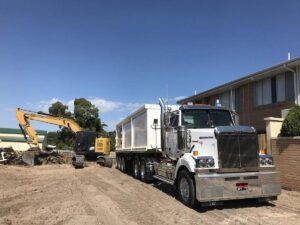
The contractor with the biggest machine fleet isn’t automatically the right choice for your site. When choosing earthmoving contractors, look for relevant experience, a clear scope and communication that accounts for ground and access conditions, especially for projects around Melbourne.
If you’re unsure what to include in a project brief or how to compare quotes that cover different work, you’re not alone. Site access, soil conditions, spoil removal and coordination with other trades can all affect how a job is planned, so raise these details early. The priorities may differ for a driveway, dam repair or riding arena, making experience with similar work worth discussing.
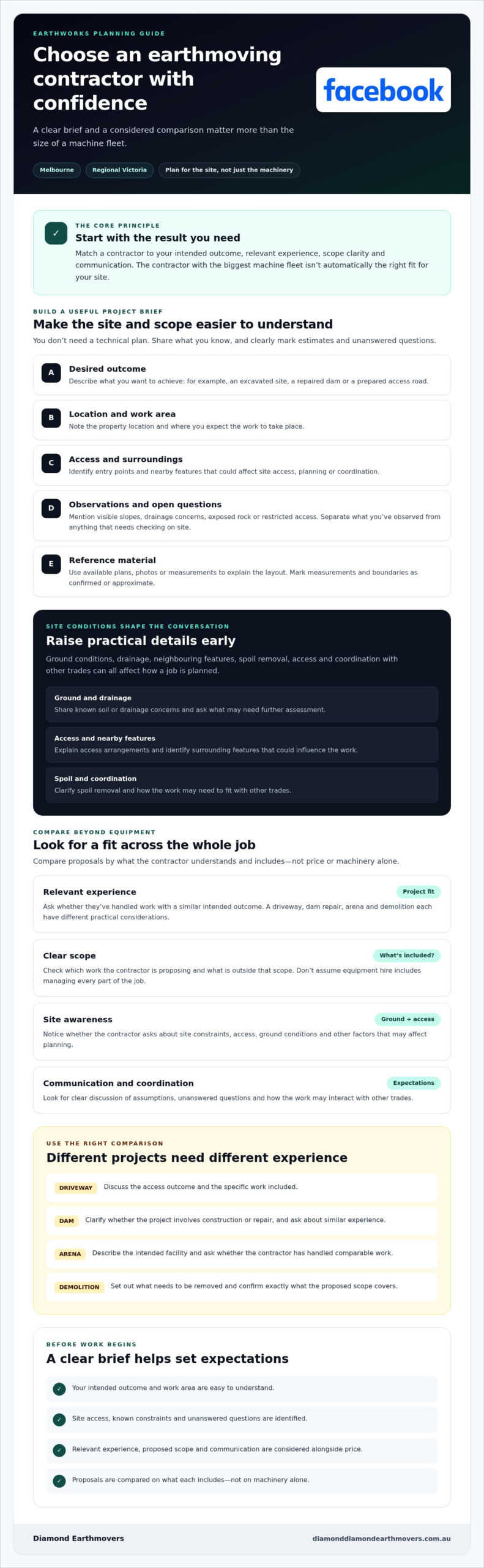
This guide explains how to define your earthworks before seeking proposals, assess contractors against practical criteria and compare inclusions without focusing on price alone. It covers questions about relevant experience, equipment, site constraints and coordination, then outlines next steps for a Melbourne or regional Victorian project. A clear brief and considered comparison can help you set expectations before work begins.
Key Takeaways
- Define the outcome you want and note the location, site access and known constraints before approaching earthmoving contractors.
- Compare relevant project experience, scope clarity and communication, not just the machinery a team uses.
- Ask how ground conditions, drainage, neighbouring features and access arrangements could affect planning and coordination.
- Shortlist teams whose experience matches your project, whether it involves excavation, a dam, an arena, an access road or a retaining wall.
- Gather your site details, then discuss your project scope with Diamond Earthmovers. You can also view the business on Google Maps.
What earthmoving contractors do and when you need one
An earthmoving contractor helps plan and carry out ground-related work, matching the scope to the site and the intended result. An earthmoving contractor coordinates the people, machinery and work needed to prepare or change a site in line with an agreed project scope. That differs from equipment-only hire, where the focus is supplying machinery rather than managing the work. Check what a provider includes before assuming they’ll handle every part of a project.
Earthworks can include shaping or moving soil for roads, construction and other site works. The Earthworks in civil engineering overview provides further context on grading, road construction and excavation. The work and required experience can vary considerably from one site to another.
Which projects can earthmoving contractors help with?
Depending on their stated services and experience, a contractor may take on site excavation, demolition, dam construction or repairs, and equestrian facilities such as horse riding arenas and yards. Other project types include driveways, access roads, rock retaining walls and grader work.
These scopes aren’t interchangeable. A driveway has a different intended outcome from a dam repair, while arena work and demolition each bring their own practical considerations. Not every provider offers every service, so check their stated scope and discuss the work you need done.
When is specialist experience relevant?
Relevant experience matters when the work has specific demands. A dam project differs from preparing an arena, and demolition involves a different scope again. Instead of asking only what machinery a contractor owns, describe the finished outcome you’re aiming for and ask whether they’ve handled similar work.
For example, explain whether you need a site excavated, an existing structure removed or an access road prepared. Share what you know about the location and site conditions, then clarify which work the contractor would include. This gives both sides a useful starting point for discussing fit.
For more detail on excavation work, see the Melbourne excavation guide. Diamond Earthmovers is a Melbourne-based, family-operated business working across Victoria. Its services include excavation, demolition, dam builds and repairs, arenas and yards, driveways and access roads, rock retaining walls, and grader hire. To discuss whether your project scope fits, contact the team or view the location on Google Maps.
How to prepare a clear brief before contacting earthmoving contractors
A useful brief doesn’t need technical specifications or a detailed construction plan. It should show what you want to achieve, where the work is and what you know about the site. Separate confirmed details from estimates and open questions so an assumption isn’t mistaken for a measured fact.
A practical earthworks brief states the intended outcome, site location, work area, access arrangements, known constraints and details that still need checking. Sharing this information early helps a contractor understand your request and identify what else needs discussion or an on-site assessment. It doesn’t guarantee a quote or remove the need to clarify the scope.
What information should you gather about the site?
Start with the property location and the area where you expect work to take place. Note available access points and nearby features that may affect how the site can be approached or used. Plans, photographs and measurements can help explain the layout, but label estimates clearly, including approximate distances or boundaries.
Flag what you’ve observed without trying to diagnose it. For example, mention visible slopes, drainage concerns, exposed rock or restricted access. Keep observations separate from questions that may need an on-site assessment. For a Melbourne or regional Victorian property, a marked-up photo can help show where access begins and which area you want to discuss.
- Location: the property address or general location.
- Work area: where the work is intended to happen.
- Access and surroundings: entry points and nearby features to consider.
- Reference material: available plans, photos and measurements, marked as confirmed or approximate.
- Open questions: anything you’re unsure about and would like assessed.
How do you describe the outcome you want?
Explain how the finished area needs to function. Is the goal to provide vehicle access, create water storage or prepare an arena? Describe the practical result you’re seeking rather than prescribing a construction method you haven’t confirmed is suitable. This gives the contractor a clearer basis for discussing the work and identifying any further site information needed. For a broader understanding of what earth works involve and how to plan a project, including how soil type, drainage and site contours affect scope, that guide covers the key considerations before you finalise your brief.
For driveway planning, the Victoria driveway and access-road guide offers related context. As you prepare your enquiry, keep timing preferences separate from confirmed requirements, and note any questions about site access or the intended use of the finished area.
With your notes together, you can share your project details with Diamond Earthmovers to discuss the scope. The Melbourne-based business works across Victoria. View its Google Maps listing.
How to compare earthmoving contractors beyond their equipment
A machine may suit a job without the contractor being the right fit to plan and carry it out. Project fit depends on relevant experience, a clearly understood scope and good communication, not equipment availability alone. Use the same criteria for each proposal, then ask for clarification wherever details differ.
What should a useful proposal make clear?
Check that each proposal reflects the outcome you described, the work area and the site details you shared. A brief proposal may still be useful, but it isn’t directly comparable with a more detailed one until you understand what each includes.
Compare like with like. Ask about assumptions, exclusions and unresolved site questions that could change the scope. If one proposal mentions spoil removal and another doesn’t, clarify whether it’s included, excluded or still to be assessed. Don’t assume silence means the same thing across proposals.
| What to compare | Questions to ask |
|---|---|
| Relevant experience | Has the contractor worked on projects similar in type and site conditions? |
| Scope clarity | Does the proposal describe the work and intended outcome? What assumptions or exclusions apply? |
| Communication | Who will discuss the work, coordinate decisions and advise you about changes? |
| Next steps | What information, site checks or decisions are needed before the scope can be confirmed? |
Which questions help assess project fit?
Ask about experience with work like yours and conditions similar to those at your property. A contractor familiar with one project type may not have the same practical experience with another. Explain the outcome you want, then ask how the proposed approach relates to it. For crushed-rock driveways, consider the finish you want and how it suits the access road’s intended use.
Clarify who you’ll speak with as the work is discussed, how decisions will be made and how changes to the agreed scope will be raised. These questions help you understand how the working relationship may run, not just what machinery could arrive on site.
Master Builders Australia provides background on the national building and construction industry association. It’s useful context, but association information alone doesn’t establish whether a contractor suits your specific project.
After comparing the details, you can discuss your project scope with Diamond Earthmovers. The Melbourne-based team works across Victoria. View the business on Google Maps.
How to plan earthworks around site conditions and project coordination
Groundwork needs to be planned around the site, not just the task. Access, working space, drainage and nearby features can shape how a project is discussed and what information a contractor needs before work begins. For a rural access road, for instance, explain where vehicles enter and which parts of the property need to remain accessible.
Which site conditions should you discuss early?
Share what you know about the route to the work area and the space available for people and machinery to move or work. Mention restricted entry points, narrow sections or areas that need to stay clear. If the project is near buildings, fences, trees, services or other assets, flag their location so they can be considered in planning.
Be clear about uncertainty. If you’ve noticed water collecting, a slope, exposed rock or changes in the ground, describe what you’ve observed rather than guessing at the cause. Ask how unknown ground or drainage conditions will be assessed and whether an on-site check is needed before the scope is confirmed. This keeps assumptions visible and gives the contractor a chance to explain what still needs clarification.
How can communication keep work aligned?
Agree early on how questions, progress updates and proposed changes will be raised and recorded. Confirm who is the main contact, who can approve decisions and who will arrange access or provide further site information. If someone else needs to make decisions, establish how they’ll be involved so an unanswered question doesn’t hold up coordination.
Some projects may depend on work by other people or decisions about access and timing. Identify those dependencies before agreeing on the scope, and clarify who is responsible for each decision. A shared understanding helps everyone respond to changes with the same information.
Permits, safety duties and environmental requirements can depend on the specific work and site. Don’t rely on a general article or an assumption about what applies across Victoria. Check project-specific requirements with the relevant Victorian authority or a qualified adviser, and raise any questions with your contractor before work proceeds.
Diamond Earthmovers is a Melbourne-based, family-operated business working across Victoria. For a discussion about how site access or conditions may shape your project, contact the team or view the business on Google Maps.
How to take the next step with an earthmoving contractor in Victoria
Once you’ve clarified the work and compared relevant experience, the next step is a practical conversation about your site. A project discussion can help establish whether the contractor’s services suit the job and what information is still needed to understand the scope. You don’t need every detail resolved before making an enquiry, but clear notes make it easier to cover the essentials.
What should you have ready for an initial enquiry?
Gather the details that help explain the project. Keep confirmed facts separate from estimates or questions that still need checking.
- Location: the property address or general location in Victoria.
- Intended outcome: what you need the finished area to do, such as provide rural vehicle access.
- Work area: an approximate description of the section involved, noting if measurements are estimates.
- Site access: where people and machinery may enter, along with any known restrictions.
- Reference material: relevant photos or plans, with approximate details clearly labelled.
- Questions and timing: note uncertainties and any timing preferences, without assuming a particular start date will be available.
For a driveway or access road, describe where the route begins and ends, how it’s used and what outcome you’re seeking. Avoid prescribing a construction method before the site and scope have been discussed. This leaves room to clarify what approach may suit the conditions.
How can a local contractor help clarify the scope?
Earthmoving contractors can discuss how a project request relates to their stated services and what further details may be needed. Diamond Earthmovers is a family-operated Melbourne business working across Victoria. Its confirmed services include driveways and access roads, grader hire, excavation, demolition, dam builds and repairs, horse riding arenas and yards, and rock retaining walls. For a rural access project, explain the job and ask which parts fit the relevant service scope.
A useful conversation can identify unanswered site questions, access details to confirm or decisions you’ll need to make before the work can be properly discussed. You can view Diamond Earthmovers on Google Maps as a location reference.
Take your next earthworks step with confidence
Choosing earthmoving contractors is easier when you’re clear about the result you want and what’s known about your site. A concise brief covering the location, work area, access and possible constraints gives contractors a useful starting point. Then compare relevant project experience, scope details and communication, and ask about assumptions or unanswered site questions before deciding.
Diamond Earthmovers is a family-owned and operated Melbourne business serving projects across Victoria. Its confirmed work includes excavation, demolition, dam builds and repairs, driveways and access roads, horse riding arenas and yards, rock retaining walls, and grader hire. A conversation can help clarify whether your project fits the services offered and what information may still be needed.
Every site is different, but a clear brief and open questions can help you take the next step with greater confidence. For a location reference, view Diamond Earthmovers on Google Maps.
Frequently Asked Questions
What does an earthmoving contractor do?
An earthmoving contractor carries out or coordinates groundworks such as excavation, grading and site preparation, depending on the services they offer. Some earthmoving contractors also undertake dam works, demolition, access roads or retaining walls. Services vary between businesses, so describe the result you want and check which parts the contractor can assess and deliver. For a Melbourne project, share the site location and any known access or ground constraints.
How do I choose an earthmoving contractor?
Start by defining the outcome you want, where the work is and what you know about access and site conditions. Compare contractors on relevant experience, scope clarity and communication, not machinery alone. Ask what assumptions or exclusions apply and what still needs a site assessment. Check that the contractor’s stated services match your project, then clarify how questions and decisions will be handled before choosing who to contact.
What information should I give earthmoving contractors for a quote?
Share the property location, intended result, approximate work area, access details and known constraints. Photos, plans or measurements can help explain the request, but label estimates clearly so they aren’t mistaken for confirmed details. Mention observations such as drainage concerns or exposed rock without guessing at a solution. Ask what additional information or assessment the contractor needs to understand the proposed scope. A clear brief makes it easier to discuss the work.
Do earthmoving contractors assess the site before work starts?
The assessment process depends on the project and contractor. A conversation and the site information you provide may help identify what needs closer review, while some conditions may require an on-site assessment. Ask how access, ground conditions and the proposed work area will be checked, and what decisions or details are needed before the scope is confirmed. Don’t assume a site visit is always included; clarify the process directly with the contractor.
Are earthmoving contractors responsible for permits and approvals in Victoria?
Responsibility and requirements can depend on the property, project type and location, so don’t assume one answer applies across Victoria. Ask the contractor which project requirements need checking, then confirm relevant approvals with the responsible Victorian authority or a suitably qualified adviser. Check current requirements for your specific site before work begins. General online information can help you identify questions, but shouldn’t replace advice on the project’s actual requirements.
Can one earthmoving contractor handle excavation, access roads and dam work?
Some contractors offer several services, but check their experience and fit for each part of the work. Diamond Earthmovers is a Melbourne-based, family-operated business serving projects across Victoria. Its listed services include excavation, dam builds and repairs, and driveways and access roads. A discussion can help clarify whether your requirements fit the stated scope and what site information is still needed. Discuss your project with the team or view Diamond Earthmovers on Google Maps.
Planning earthworks in Melbourne or elsewhere in Victoria? Contact Diamond Earthmovers to discuss your project scope.