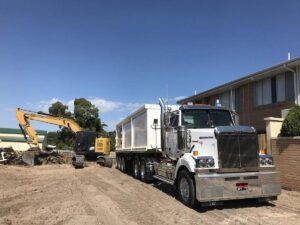
What if the trench you’re planning won’t solve the real drainage problem? An arena that holds water, turns muddy or dries unevenly can make every ride harder. Horse arena drainage victoria starts with understanding where water comes from and where it can go safely. Trenching may help, but it’s only one part of a well-planned system.
When water pools, it’s tempting to look for a clear place to dig. Before excavation begins, consider the site’s levels, soil, existing arena layers and a suitable discharge point. If these details aren’t assessed, a trench could leave water trapped or disturb the surface you’re trying to protect.
This guide explains what trenching can and can’t do, what to check on your Victorian property, and when an earthworks professional can help consider site levels and water movement. It also explains how trench placement fits into broader arena drainage planning, so you can decide on a practical next step.
Diamond Earthmovers is a Melbourne-based, family-owned business specialising in horse riding arenas, yards and precision site preparation. You can find the Diamond Earthmovers location on Google Maps.
Key Takeaways
- Horse arena drainage victoria starts with understanding where water comes from and where it can go, not simply choosing a place to dig.
- Record wet spots, runoff paths and surface changes after rain to help identify what needs assessment.
- Consider trench routes, site levels, the outlet and arena layers together. A trench alone may not resolve the problem.
- Before excavation, clarify the work area and outlet, and note access challenges or uncertainty about levels.
- Diamond Earthmovers brings horse arena development and excavation experience to site preparation. Discuss your project or view the Google Maps location.
Horse arena drainage in Victoria: what trenching can, and cannot, solve
A wet arena can disrupt riding and make footing difficult to manage. Water may collect in low spots, cross the surface or leave some areas soft while others dry out. Before considering excavation, work out what may be contributing: rainfall, runoff from surrounding land, groundwater, the site’s fall, or the condition and layers of the footing.
Trenching means excavating a planned route to collect or direct water towards a suitable outlet. It isn’t a guaranteed standalone fix. A trench can’t correct every surface-level or footing issue, and a poorly considered route, depth or outlet may create further problems.
Drainage planning is about managing water across the whole site; digging a trench is only one possible part of that plan. A French drain is one trench-based approach to directing water, but whether it suits an arena depends on the conditions at the property.
What causes water to linger in a horse arena?
Rain falls directly onto the arena, while runoff from higher ground, accessways or nearby areas may flow towards it. The site’s natural levels influence where water travels and whether it can drain away. Water may also persist below the surface, so a visible puddle doesn’t always show the full issue.
Soil behaviour varies between properties, so don’t assume the cause without an assessment. After rain, note where water collects, where it flows and which areas stay wet longest. Look for changes in the footing too, such as uneven drying or patches that become difficult to ride on.
When might trenching form part of the solution?
A trench may help carry collected water along a planned route towards a suitable outlet. The route needs to work with the site’s levels and the direction water naturally moves. If there’s no appropriate place for the water to go, excavation alone won’t resolve the underlying issue.
Consider trenching alongside surface levels and the arena’s intended layers. Excavation could disturb those layers if the work isn’t planned carefully. For horse arena drainage victoria, the right approach depends on what’s happening above and below the surface, not simply on adding a gravel-filled trench.
Diamond Earthmovers’ experience in horse arena development, site preparation and excavation can help bring those earthworks considerations together. To discuss your property, contact Diamond Earthmovers. You can also view the Google Maps location.
Assess the Victorian arena site before planning drainage trenches
Before drawing a trench route, build a clear picture of how water behaves across the arena and surrounding property. After rain, record where puddles form, which way runoff travels, and which parts of the surface stay soft or dry unevenly. These observations offer useful clues, but they don’t confirm the cause. A low patch may collect surface runoff, while persistent wetness below the footing may need further investigation.
Trench alignment should follow assessed water pathways and lead to a viable outlet. A route that looks convenient on a sketch may not suit the site’s actual levels, soil or use.
Map levels, runoff and likely water pathways
Note the high and low points around the arena, along with nearby areas that could contribute runoff. Take photos after rain and mark where water enters, crosses or remains on the property. Then consider where collected water could go. Check whether an outlet is available and suitable before planning excavation.
Compare any proposed route with gates, accessways, structures and areas used by horses and machinery. A route that interferes with arena access or crosses a busy working area may need reconsideration. These observations help prepare for an assessment, but don’t replace checking levels and drainage suitability.
Consider Victorian site conditions without assuming they’re uniform
Conditions can differ between Melbourne properties and regional Victorian sites, and can vary across one property. Soil, slope, existing ground conditions and neighbouring land all affect how water moves. Regional descriptions can provide context, but they can’t confirm how your arena will drain. An on-site assessment is needed before drawing conclusions about soil behaviour or the right drainage approach.
Confirm any local requirements or restrictions on where water may be discharged with the relevant professional or authority. Don’t assume water can simply be directed beyond the arena boundary; engaging drainage specialists like CH Enviro can help clarify compliant outflow points and broader site solutions.
- Record: wet areas, runoff direction and changes in footing after rain.
- Map: apparent high and low points, nearby contributing areas and possible route constraints.
- Separate clues from conclusions: observations can guide an assessment, but don’t establish soil type, groundwater conditions or a suitable discharge point.
For horse arena drainage victoria, a site plan is most useful when it reflects what’s happening on the ground. Diamond Earthmovers’ experience with arena preparation, site levels and excavation can help inform those earthworks considerations. To discuss your property, contact Diamond Earthmovers or view the Google Maps location.
Plan trench layout, outlet and arena layers as one drainage system
Base a trench route on observed water pathways, site levels and a suitable destination for collected water. The route, outlet and arena construction need to be considered together. If there’s no viable outlet, or the route conflicts with the site’s levels, trenching may not address the problem.
First, consider whether water is running across the surface or lingering in or beneath the footing. Surface runoff and subsurface moisture can call for different responses. Persistent wetness may have causes that aren’t clear from surface observations alone. If the source, levels or outlet are uncertain, seek a site-specific professional assessment before settling on a plan.
| What you observe | What it may indicate | What to check |
|---|---|---|
| Water flows across the arena or enters from nearby ground | Surface runoff may be contributing | Where the water comes from, how levels guide its path and whether it can be directed away appropriately |
| Areas remain wet or soft below the surface | Subsurface moisture may need consideration | Soil and arena layers, the site levels, and whether a planned collection route could reach a suitable outlet |
| Wet patches persist despite no obvious surface flow | The cause may need further investigation | Seek a site-specific assessment before settling on a trench layout |
Protect the arena surface and footing layers
An arena is built as a profile of layers, so excavation and reinstatement should be coordinated with its intended construction. Cutting through finished layers without a clear plan can disturb the surface, affect how layers meet or leave the repaired area uneven. The right approach depends on the arena’s design and site conditions. Confirm trench dimensions, gradients and materials for the specific project rather than assuming them.
Diamond Earthmovers develops horse riding arenas and yards, including round yard construction and provides precision site preparation and excavation. Discussing the arena’s design and the proposed earthworks together can help clarify what needs to be considered before work begins.
For horse arena drainage victoria, match the drainage approach to the observed water movement rather than choosing a trench layout first. To discuss how site preparation and excavation might fit your arena plans, contact Diamond Earthmovers. You can also view the Google Maps location.
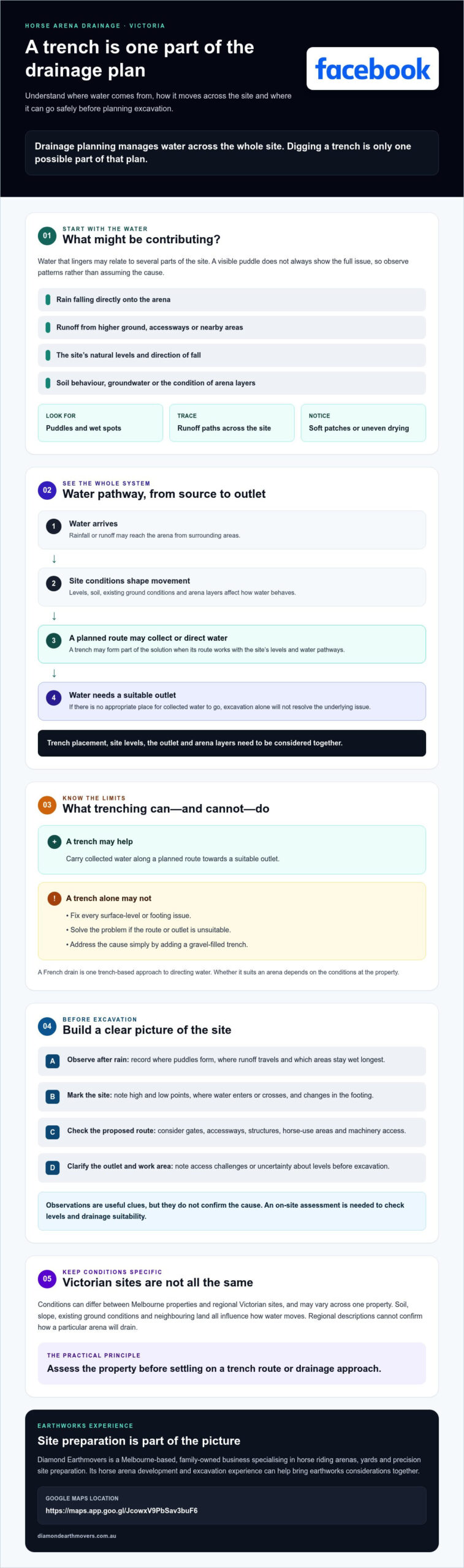
How to prepare for horse arena drainage trenching
Preparation can make a site discussion clearer and help identify questions to resolve before excavation is considered. For horse arena drainage victoria, gather useful observations, clarify the proposed work area and outlet, and note what else could be affected. These steps don’t replace a site assessment, but they provide a practical starting point.
What information should an owner gather first?
Keep a simple record after rain. Note when water appears, where it collects or flows, and how the arena surface changes as it dries. Photos of the arena and surrounding runoff paths can help show patterns that are difficult to describe.
Include the arena’s intended use, any known surface layers, and constraints such as nearby structures, gates or limited access. Treat these details as observations, not a diagnosis of soil or drainage conditions.
- Document wet areas. Mark persistent puddles, soft spots and areas that dry differently. Note whether conditions change after rainfall.
- Photograph the site. Capture the arena and nearby ground where water appears to enter, cross or collect.
- List site details. Record the arena’s use, known layers, access points, structures and any other constraints you’re aware of.
- Discuss a site assessment. Share your notes with an earthworks professional and ask what needs checking before a trench route is considered.
What should be discussed before excavation starts?
Before agreeing on work, clarify the proposed trench route, intended outlet, excavation scope and how the arena will be reinstated. Confirm that the outlet is suitable rather than assuming water can be directed off-site. Discuss equipment access, how the surrounding property and arena surface will be protected, and whether existing services or structures could affect the work area.
Ask the appropriate parties to confirm any permits, service locations and discharge requirements that may apply to your property. These depend on the site and proposed work, so don’t rely on a general assumption. Confirm project timing, costs and construction details for the specific job rather than guessing in advance.
Diamond Earthmovers is a Melbourne-based, family-owned business that develops horse riding arenas and yards and provides excavation and precision site preparation. A discussion can help clarify which earthworks considerations need checking before a trench is planned. You can view the Google Maps location.
When to bring in a Victorian earthworks professional
Professional input is useful when you can see a water problem but can’t confidently trace its path or decide where it should go. Unclear site levels, difficult equipment access, no obvious outlet or wetness that persists without visible surface runoff are all reasons to pause before excavation. A trench needs to suit the ground and arena, not just the spot where water collects.
Bringing an earthworks professional into the discussion early can help connect excavation with arena preparation. Consider the route and scope alongside existing or planned footing layers, access and site levels. This supports informed planning, but doesn’t guarantee a particular drainage outcome. Site conditions and any discharge requirements still need to be assessed and confirmed.
Questions to ask when discussing a drainage project
A useful project discussion should clarify what’s known, what still needs checking and who will confirm it. Consider asking:
- How will site levels and likely water pathways be assessed?
- Where is the proposed discharge point, and how will its suitability be confirmed?
- How might trenching interact with existing or planned arena footing layers?
- What information, site access or preparation is needed before the work can be considered?
- How will the excavation area and surrounding arena surface be managed during reinstatement?
Clear answers can help you understand the proposed scope and identify outstanding questions. If levels, access or the outlet are uncertain, resolve those details before settling on a trench layout.
Take the next step with a clear site brief
Before getting in touch, gather a short summary of the arena’s location, intended use and observed wet areas. Note where water appears to enter or remain, how equipment could access the work area, and any nearby structures or known constraints. Photos taken after rain can make the discussion more specific.
Diamond Earthmovers is a Melbourne-based, family-owned business that develops horse riding arenas and yards and provides excavation and precision site preparation throughout Victoria. Its earthworks experience can help bring site levels, excavation and arena planning into the same conversation. For horse arena drainage victoria, a clear site brief is a practical starting point, not a substitute for a project-specific assessment.
View the Google Maps location if helpful, then share your site details and questions with the team.
Plan your next step towards a drier arena
Effective horse arena drainage victoria starts with understanding how water moves across your property. Trenching may form part of the answer, but its route and outlet need to suit the site, and excavation should be planned with the arena’s footing layers in mind. Recording wet areas and runoff patterns gives you a useful starting point for a site discussion.
Diamond Earthmovers is a Melbourne-based, family-owned earthmoving business serving Victoria. The team develops custom horse riding arenas and yards and provides professional excavation and precision site preparation. Discussing site levels, access and water movement together can help clarify what needs checking before work is considered.
A clear plan is a practical first step towards an arena that’s easier to manage. You can also view the Diamond Earthmovers location on Google Maps.
Frequently Asked Questions
How does trenching help drain a horse arena?
Trenching can create a planned route to collect or direct water towards a suitable outlet. Its usefulness depends on the arena’s levels, where water comes from and whether it can discharge appropriately. A trench won’t automatically correct surface runoff, persistent groundwater or footing problems. In Melbourne and elsewhere in Victoria, assess how water moves across the property before deciding whether trenching belongs in the drainage plan.
Where should drainage trenches go around a horse arena?
Plan a trench only after assessing site levels, water pathways and the intended outlet. Note where runoff enters, where water collects and how it travels after rain, then consider those observations alongside arena access, structures and footing layers. There’s no single layout that suits every property. A professional site assessment can help determine whether a proposed route is practical and the outlet is suitable.
Can trenching fix a muddy horse arena?
Not always. Trenching may help direct collected water, but mud can also relate to surface levels, surrounding runoff, soil behaviour or the condition of arena layers. If only one factor is addressed, wet or uneven areas may remain. Before digging, identify where and when the arena becomes muddy and seek site-specific advice if the cause or appropriate outlet isn’t clear.
What should I check before digging drainage trenches?
Before excavation, document wet spots and runoff paths, and clarify the proposed trench route, outlet and work area. Check equipment access and whether existing services, structures or arena layers may be affected. Confirm any relevant service-location, permit or discharge requirements with the appropriate parties for your property. A clear scope should also explain how the area will be reinstated, without assuming dimensions or materials before assessment.
Do horse arenas in Victoria need a drainage trench?
No, a trench isn’t automatically needed for every arena in Victoria. The right approach depends on the property’s levels, soil and water movement, as well as the arena’s construction and intended use. For horse arena drainage victoria, start with observations after rain rather than assuming a particular trench layout will suit. Melbourne and regional sites can differ, so assess the conditions at the specific property.
When should I get professional advice about arena drainage?
Seek professional advice if site levels or water pathways are unclear, access is difficult, there’s no obvious outlet, or wet areas persist without an apparent cause. Diamond Earthmovers is a Melbourne-based, family-owned business developing horse riding arenas and yards and providing excavation and precision site preparation throughout Victoria. You can discuss your arena project or view the Google Maps location.