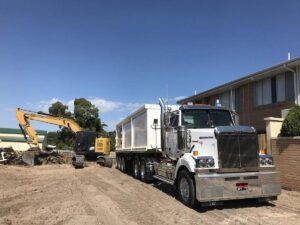
A round yard’s long-term performance depends on what happens below the fence line. For horse round yard construction Victoria property owners need to consider how slope, soil and water movement will affect the finished surface, not just where the panels will sit. Choosing a suitable location and preparing the base carefully can help reduce the risk of a yard becoming muddy, uneven or difficult to maintain.
It’s natural to focus first on the yard’s size and enclosure, but the ground beneath it also affects how reliably it can be used. This guide takes you through the practical decisions to make before work starts, from assessing the site to planning levels, drainage and ground preparation. Use the steps to shape a clear project brief around your horses, property and site conditions before discussing the work with an earthmoving team.
Key Takeaways
- Start with how you’ll use the yard and how your horses will move through it to guide the layout.
- For horse round yard construction Victoria projects, assess slope, soil and water movement before deciding how to prepare the ground.
- Plan access and intended activities alongside the surface, as these choices affect how practical the yard will be to use.
- Bring together intended use, access, existing levels, ground conditions and water management in a clear project brief.
- Explore how custom equestrian yards, site preparation and precision levelling can support your plans with Diamond Earthmovers, or view the location on Google Maps.
Horse round yard construction in Victoria: start with purpose and site
Before choosing panels or setting out a circle, decide what the yard needs to help you do. One property may need a space for groundwork and handling, while another may use it for controlled exercise or introducing a young horse to routine. These different uses affect where the yard should sit, how horses and handlers approach it, and which facilities should be nearby.
A round yard is an enclosed circular area for handling and working a horse; a riding arena is a larger space intended for riding activities and broader movement. The Round pen overview offers background on the structure and its uses. For your property, base the arrangement on the activities you have in mind.
What is a horse round yard used for?
Round yards are commonly used for groundwork, handling and controlled exercise. Picture a typical session: where will the horse enter, where will you stand, and how will you move safely around the outside? Clear access to the gate and space to handle equipment can make everyday use more straightforward. Also consider who will use the yard and which nearby facilities need to connect with it.
Intended use helps define the layout. A yard mainly used for handling may have different access needs from one used regularly for groundwork. There’s no single dimension that suits every horse or activity, so consider your intended use, available space and how horses will move within and around the enclosure.
Which parts of a Victorian property suit a round yard?
Look for a practical position with a workable route for horses, people and equipment. Consider nearby structures, gates and the daily movement between the yard and other parts of the property. Existing levels matter too: a spot that seems convenient may need more preparation if it sits on a slope or where water collects after rain.
Conditions vary from one Victorian property to another. Soil affects how the ground responds to preparation and use, while slope and water movement influence where runoff travels and whether the area is likely to remain usable. If possible, walk the site after rain and note soft patches, pooling and uneven ground. These observations give an earthmoving team useful context when planning levels and preparation.
Think about the round yard as part of the wider equestrian layout, alongside riding arenas, access routes and other yards. Taking this broader view can help prevent one facility from complicating another. For a property-specific discussion of horse round yard construction Victoria, contact Diamond Earthmovers about custom equestrian yards, site preparation and precision levelling. You can also view Diamond Earthmovers on Google Maps.
How Victoria site conditions shape round yard construction
A round yard’s footprint may look simple on paper, but the ground beneath it determines how preparation should proceed. Properties across Victoria differ in slope, soil and the way water moves across the site. Assessing those conditions early helps shape a plan around the actual land instead of relying on assumptions that may not suit the property.
How do slope and soil affect a round yard?
Existing levels influence where excavation may be needed and how the working area can be formed. A sloping site, for example, may need a different approach from a relatively even area. Changes in level around the proposed yard can also affect how the finished surface meets surrounding ground and nearby access points.
Soil conditions matter because the ground can respond differently to preparation and regular horse use. A site assessment helps identify the conditions and inform decisions about the work required before the surface is finished. Don’t assume that conditions elsewhere on the property, or at another Victorian location, will be the same at the proposed yard site.
Site preparation helps turn a chosen surface into a practical area for regular use. Accurate levels support a consistent finish and help avoid low or uneven areas that can make everyday use less convenient. That’s why horse round yard construction Victoria planning should treat levelling as a core part of the build, not a final detail.
Why plan water movement before construction?
Water that collects in or crosses the yard can affect the surface underfoot and how usable the area remains after wet weather. Before work begins, look at where water currently travels, where it tends to gather and how the proposed yard relates to the surrounding ground. These observations help guide grading and drainage planning without assuming one solution will suit every site.
For practical ideas about horse facility footing and layout, Penn State Extension’s all-weather paddock planning resource offers useful context. The same principle applies here: plan the working area with its ground conditions and water movement in mind. A dedicated horse arena drainage guide can also provide broader context on managing water around equestrian surfaces.
Before earthworks, note visible slopes, soft or uneven patches, and places where water pools or flows. Sharing these observations helps an earthmoving team plan site preparation and levels around the property. For a project-specific discussion, talk with Diamond Earthmovers about site preparation, or view Diamond Earthmovers on Google Maps.
Round yard layout and surface: decisions to make before earthworks
Once you’ve assessed the site, translate your intended use into a workable layout and surface brief. These decisions are connected: the yard needs to fit the available area, allow practical movement for horses and people, and suit the way you expect to use and maintain it.
How should the yard layout reflect its intended use?
Start by mapping how a typical session will work. Consider the gate position, where the handler will enter and move, and how the yard connects with nearby facilities. If horses regularly move between the yard and a stable, paddock or arena, a direct route can make daily handling easier. Allow space for people to work around the enclosure and avoid placing access where it conflicts with other property traffic.
Available site area is only part of the decision. Equipment also needs a practical route to the work area, so consider gates, turning space and narrow or uneven approaches. A layout that suits horse movement but restricts machinery access may affect site preparation. Planning horse round yard construction Victoria projects means balancing these needs with the property’s existing features.
What should owners consider when discussing the surface?
The prepared ground and the surface layer have different roles. Site preparation establishes the base and levels. The surface is then considered in light of intended activities, ground conditions and your expectations for upkeep. There’s no single option that suits every yard. A surface discussion is more useful when it starts with how often you’ll use the yard and what the site assessment shows.
Use this comparison to organise the conversation before earthworks begin. It doesn’t prescribe dimensions or materials; it connects decisions to the job the yard needs to do.
| Planning consideration | Questions to resolve |
|---|---|
| Layout and access | How will horses and people enter, move around and reach nearby facilities? Can equipment access the work area? |
| Intended activities | Will the yard mainly support handling, groundwork or controlled exercise? |
| Ground preparation | What do the existing levels and site conditions mean for preparing a consistent base? |
| Surface and upkeep | What surface approach fits the intended use and the maintenance you can manage? |
Bring your answers together before work starts. Diamond Earthmovers tailors equestrian yard preparation and levelling to the property and its intended use. Discuss your round yard project with the team, or view Diamond Earthmovers on Google Maps.
A practical horse round yard construction planning template
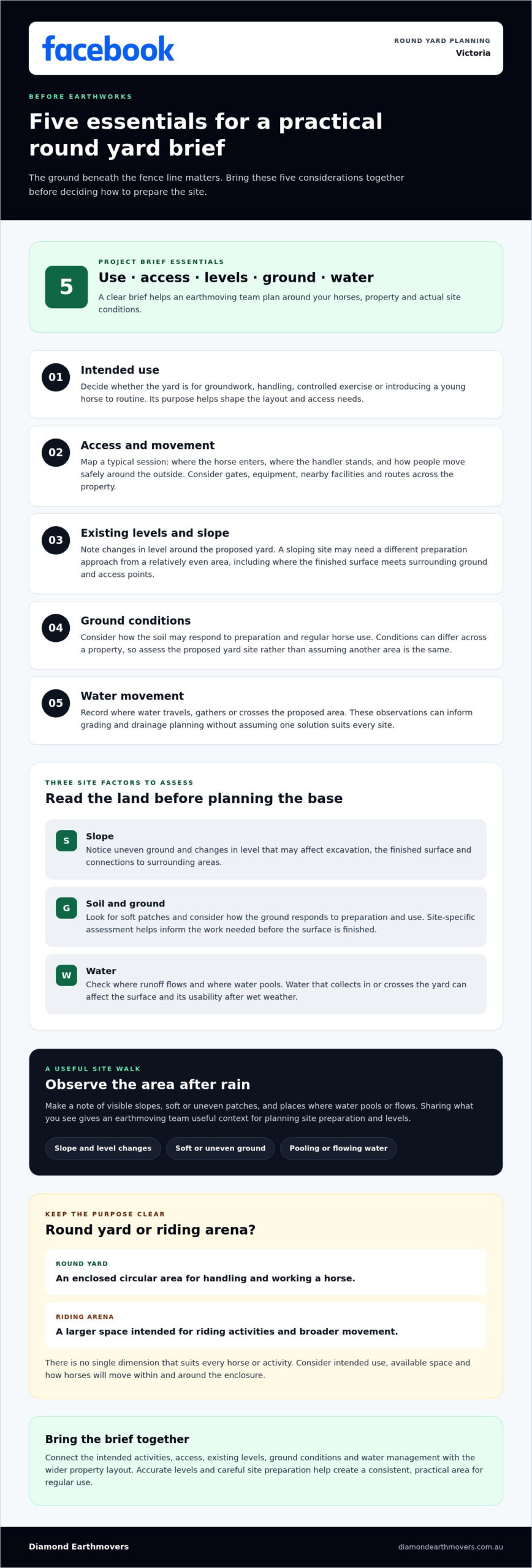
A clear project brief helps turn an idea into a practical plan. Start with decisions you can make as the owner, then record what needs to be understood through a site assessment. This gives an earthmoving team useful context without assuming every property needs the same design or work sequence.
Use this sequence to organise your notes for horse round yard construction Victoria projects:
- 1. Define the purpose. List the activities the yard needs to support, such as handling, groundwork or controlled exercise. Note who will use it and what a typical session involves.
- 2. Mark your preferred area. Record the part of the property you have in mind. Include nearby structures, fences and facilities, along with how horses usually move between them.
- 3. Describe access and daily priorities. Note gates, narrow approaches, turning constraints and obstacles that could affect equipment access. Add practical priorities such as convenient entry for horses, frequency of use and the level of maintenance you can manage.
- 4. Record what you observe on site. Note visible slopes, uneven or soft areas, existing levels and where water flows or gathers after rain. These observations are useful context, not a substitute for assessing the ground conditions.
- 5. Plan the preparation sequence with the site in mind. Site assessment informs the project plan, including the preparation and levelling required. Once the scope is understood, work can progress through preparation and a review of the formed area before the next construction decisions are made.
The first three steps capture owner decisions: intended activities, preferred location, access and maintenance priorities. The later steps depend more directly on the property. Existing levels, soil and water movement can influence the appropriate preparation, so avoid setting a fixed scope before those conditions are assessed.
There’s no universal yard dimension, construction timeframe or ground specification that suits every property. A useful brief records what you know and leaves site-dependent decisions to the assessment. This keeps expectations grounded and helps focus the project discussion on your horses, site and intended use.
Diamond Earthmovers is a Melbourne-based, family-owned earthmoving business working throughout Victoria. Its custom equestrian yards combine site preparation and precision levelling tailored to the property and its purpose. View Diamond Earthmovers on Google Maps.
Plan your horse round yard with a Victorian earthmoving team
A sound project starts with a clear picture of how the yard needs to work and what the property can support. Before discussing earthworks, bring together your intended activities, preferred location, access details and observations about the ground. Include how horses will reach the yard, where people will enter and move, and what happens to water around the proposed area after rain.
These notes connect your priorities with the site assessment. Intended use informs the layout and surface discussion, while existing levels, ground conditions and access influence how preparation can be planned. A yard on uneven ground, for example, may need a different approach from one on a relatively level area. The scope and sequence should follow the assessed site, not a standard design or assumed specification.
How does tailored earthworks support a functional yard?
Ground preparation and levelling help establish the base for the planned yard. Accurate levels contribute to a consistent, practical working area, while site-specific planning accounts for the property’s features and intended use. These decisions are closely linked: a layout that works for daily horse handling also needs to make sense for access and construction.
Diamond Earthmovers is a Melbourne-based, family-owned earthmoving business working on projects throughout Victoria. Its custom equestrian yards are shaped around the property and its intended use, with site preparation and precision levelling as important parts of the work. This keeps planning grounded in the actual site rather than a one-size-fits-all solution.
What is the next step for a Victorian property owner?
Gather your project notes before starting a conversation. A useful brief can include:
- What activities the yard will support and who will use it.
- Your preferred location, nearby structures and practical access constraints.
- Visible slopes, existing levels, ground conditions and water movement.
- Your priorities for everyday use and ongoing maintenance.
These details give the earthmoving team a helpful starting point. The planning principles also apply across wider equestrian facilities, so the horse riding arenas and yards planning guide can help you consider how the round yard fits into the property as a whole. For horse round yard construction Victoria projects, Diamond Earthmovers brings custom yard work, site preparation and precision levelling together around your property’s needs.
There’s no need to have every technical decision settled before you begin. Start with what you know about your horses and site, then use the assessment to shape the next steps. View Diamond Earthmovers on Google Maps, then discuss your horse yard project.
Move your horse yard plans forward with confidence
Practical horse round yard construction Victoria planning starts with the yard’s intended use, then considers how access, existing levels, ground conditions and water movement shape site preparation. Layout and surface decisions should suit the property rather than rely on a one-size-fits-all specification. A clear brief keeps your priorities in view while site assessment informs the earthworks and precision levelling required.
Before starting, gather notes on daily activities, your preferred location, access constraints and what you’ve observed about the ground. These details help turn early ideas into a considered project discussion. Diamond Earthmovers is a Melbourne-based, family-owned business working throughout Victoria, with custom equestrian arenas and yards shaped around each property through site preparation and precision levelling. View Diamond Earthmovers on Google Maps.
With your purpose and site conditions clearly outlined, you’re well placed to take the next step towards a yard planned for your horses and property. Discuss your horse yard project with Diamond Earthmovers.
Frequently Asked Questions
How much space do you need for a horse round yard?
Required space depends on the yard’s intended use, how horses will move, your property layout and the access available for people and equipment. A yard planned mainly for handling may have different space needs from one used for regular groundwork. Rather than starting with an assumed standard diameter, treat dimensions as a site-specific design decision. For horse round yard construction in Victoria, assess the proposed area in the context of your property.
What is the difference between a horse round yard and a riding arena?
A round yard is generally planned as an enclosed space for focused horse handling or groundwork, while a riding arena provides room for broader riding activities. Their different purposes influence the layout, surface and site preparation each may need. Consider how horses and people will use the space and how it fits the property. Neither facility is automatically suited to every discipline or site, so plan around your intended use.
Does a horse round yard need drainage?
Water movement should be considered during planning because it can influence the surface and how usable the yard is. The appropriate approach depends on the site’s existing levels, soil and the way water moves across the property. Avoid choosing a drainage solution without understanding those conditions first. For further information about managing water around equestrian surfaces, refer to the related horse arena drainage guide alongside your site-specific planning.
Can you build a horse round yard on sloping ground?
A sloping site doesn’t by itself determine whether a round yard can be built, but existing levels will influence earthworks and planning. A site assessment helps establish how the proposed yard relates to the surrounding ground and what preparation may be needed. The suitable approach depends on the property, so avoid assuming a particular result or earthworks method before the site has been assessed.
What should I prepare before planning horse round yard construction?
Record the intended use, your preferred yard location, access conditions and nearby structures. Note visible slopes, uneven or soft areas, and where water appears to flow or collect. It’s also helpful to describe practical priorities, such as daily horse movement and the maintenance you can manage. These notes give a project discussion a useful starting point, while the construction scope depends on assessment of the specific site.
What stages are involved in horse round yard construction?
The process generally moves from defining the yard’s purpose to assessing the site, planning levels and water management, preparing the ground and reviewing the finished area. This sequence connects the owner’s intended use with the property’s conditions. The exact scope and order of work can vary from one site to another. A site-specific plan is more useful than relying on a fixed timeframe or standard construction specification.
Can a round yard be planned as part of a larger equestrian facility?
Yes. A round yard can be considered alongside arenas, access routes and other property features when planning an equestrian facility. Its position should support the intended activities and fit the overall site layout, rather than obstruct everyday movement. For broader planning considerations, see the horse riding arenas and yards planning guide. Melbourne-based Diamond Earthmovers works on custom equestrian yards throughout Victoria; view the location on Google Maps.