Hidden Costs That Can Increase Your Demolition Budget
Planning a house demolition is an exciting first step towards building a new home, but it’s easy to underestimate the extra costs that can crop up before, during, and after the demolition itself.
Why do unexpected demolition costs occur?
A professional demolition quote should set out the major project costs clearly, but there are situations where unexpected expenses are simply unavoidable. Some come down to site conditions that can’t be seen until work actually starts, while others happen because homeowners haven’t considered everything involved in preparing a property for demolition.
Knowing about these potential hidden costs before you request a quote means you can budget more realistically, ask sharper questions, and reduce the chance of financial surprises along the way.
If you’re after general demolition pricing, our guide on How Much Does House Demolition Cost in Melbourne? is a good starting point. This article looks specifically at the less obvious costs that can affect your overall demolition budget.
Most hidden demolition costs aren’t a case of contractors tacking on extra charges. They’re usually the result of issues that simply couldn’t be identified during the initial quoting process. Even after a thorough site inspection, some conditions only reveal themselves once structures are removed or excavation gets underway. Underground infrastructure, concealed structural elements, and other unknowns can all affect the final scope of work. Working with an experienced contractor helps reduce this risk, since they know the warning signs to look for during the inspection and can flag potential issues before work begins.
Can site conditions increase demolition costs?
Yes, and site conditions are one of the biggest reasons a demolition project occasionally runs over the original budget. We cover this in more depth in our guide on why some Melbourne homes cost more to demolish than others.
Every property is different, and even neighbouring homes can throw up completely different challenges below the surface. Sloping blocks, restricted machinery access, tight boundaries, retaining walls, large concrete slabs, and poor ground conditions can all call for extra labour, specialised equipment, or more time to get the job done safely. A thorough site inspection reduces the uncertainty considerably, but some of this genuinely can’t be confirmed until demolition is underway.
How can underground structures affect your demolition budget?
Homeowners naturally focus on what they can see, but it’s often what’s below ground that causes budget surprises.
Older homes in particular may have underground water tanks, septic systems, old footings, abandoned drainage infrastructure, or large concrete foundations that never made it onto the original building plans.
Removing these structures usually means additional excavation, machinery, and waste disposal, all of which can push project costs up. It’s worth discussing any known underground structures with your contractor before demolition begins. Even if you’re not certain, sharing what you know about the property’s history can help flag potential risks early.
Why does waste disposal sometimes cost more than expected?
Waste removal is already built into many demolition quotes, but disposal costs can climb if the volume or type of waste turns out to be different from what was assessed originally. Some properties hide old sheds under overgrown vegetation, buried concrete, unrecorded paving, or construction debris left behind by previous owners, none of which shows up until the demolition is well underway.
The more waste a demolition generates, the greater the transport and disposal requirements. Experienced contractors generally recycle suitable materials wherever they can, which helps reduce landfill and improve the overall environmental outcome of the project, in line with EPA Victoria’s guidance on managing construction and demolition waste responsibly.
Can changes made by homeowners increase demolition costs?
Yes, and this catches some homeowners out. Removing parts of the building yourself, storing materials on-site, or changing access arrangements before work starts can all affect how machinery operates on the property.
Likewise, if you ask for additional structures to be demolished after the contract has already been prepared, the quote will usually need to be updated to reflect the change.
If your plans shift before demolition starts, let your contractor know as soon as possible. Clear, early communication allows adjustments to be made before machinery and labour have been locked in, which helps keep additional costs to a minimum.
Do neighbouring properties affect demolition pricing?
In many of Melbourne’s established suburbs, homes sit close to neighbouring properties. Where a building is near a boundary fence, a shared driveway, or an adjoining structure, contractors often need to take extra precautions to protect what’s next door.
That can mean staged demolition, protective barriers, smaller machinery, extra spotters, more manual labour, or temporary traffic management. These measures add to the cost, but they’re essential for keeping everyone safe and avoiding damage to neighbouring properties. When requesting a quote, it’s worth mentioning any unique site constraints or nearby structures that could influence how the residential demolition is carried out.
Can utility disconnections add to your demolition budget?
Before demolition can safely go ahead, services connected to the property generally need to be disconnected, including electricity, gas, water, telecommunications, and sewerage. Depending on the property and the relevant providers, some disconnections may require advance notice, inspections, or separate arrangements altogether. If these aren’t included in your demolition quote, they can turn into an unplanned expense. Energy Safe Victoria sets out the safety requirements around disconnecting electricity and gas supplies before demolition work can proceed.
When you’re getting a quote, it’s worth asking which disconnections are included, which remain your responsibility as the homeowner, and whether any external authorities need to be contacted before work can start. Clarifying this early keeps your project on schedule.

Could permits and approvals increase demolition costs?
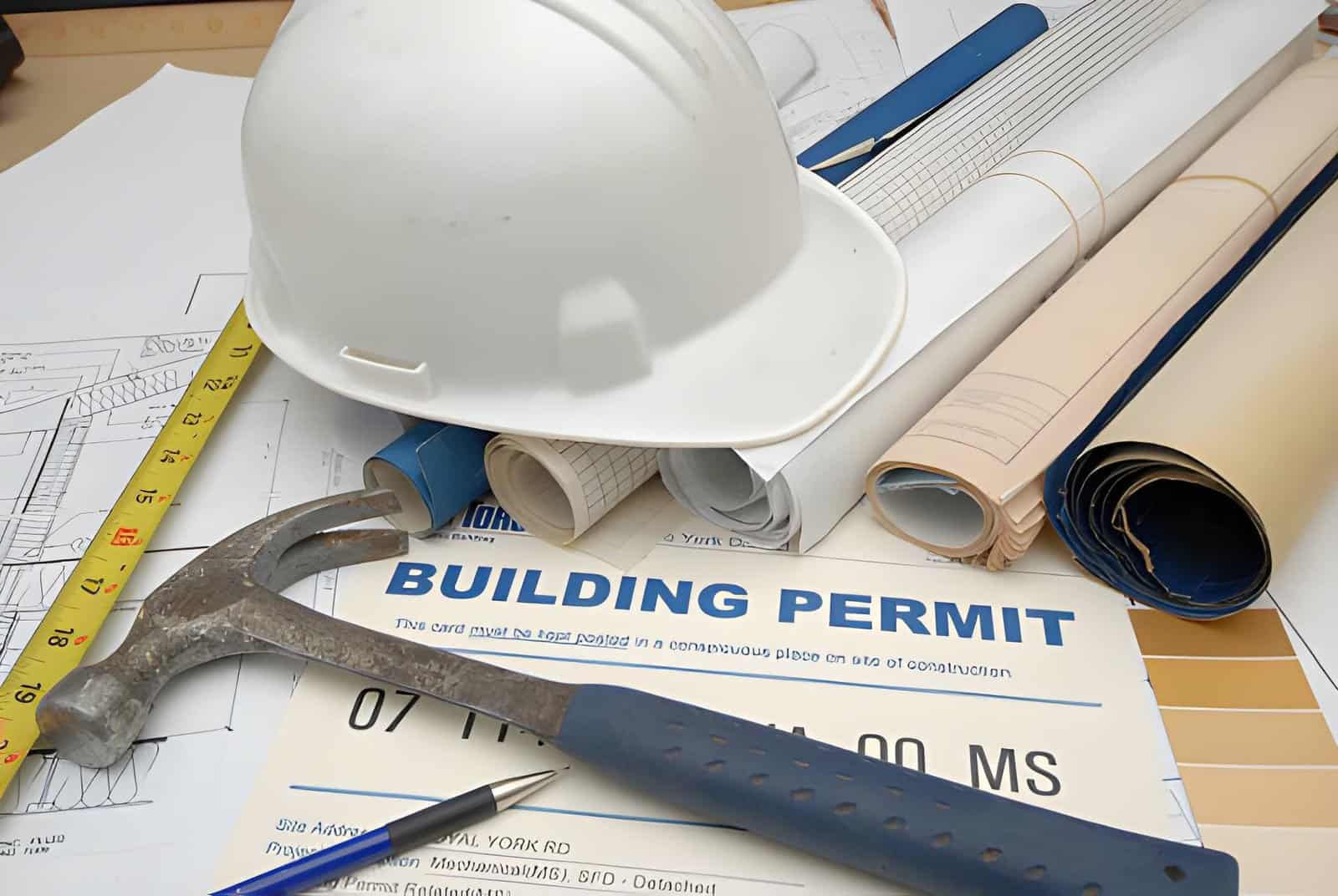
Demolition projects across Melbourne are subject to council requirements and Victorian regulations. Experienced contractors often assist with the approval process, but not every quote includes the same level of administrative support.
Depending on the property, additional costs can arise if extra documentation, engineering reports, or specialist assessments are needed before demolition can proceed.
It’s important to understand exactly what falls within your contractor’s scope of work. A detailed quotation should spell out whether permit applications, compliance documentation, and project coordination are part of the agreed price. That transparency makes budgeting far more accurate and cuts the risk of unexpected administrative costs.
Why is site clean-up important after demolition?
Plenty of homeowners assume the job is done once the house has been knocked down, but preparing the site for the next stage of construction matters just as much. Depending on your agreement with the contractor, post-demolition works might include removing remaining debris, loading and transporting waste, basic site levelling, and clearing loose rubble so the block is ready for construction.
Some contractors build all this into the standard service, while others treat it as an optional extra. If you’re planning a knockdown rebuild, it’s worth asking whether site clearing and earthmoving services can be handled as part of the same project. Combining them can simplify the construction process and save you juggling multiple contractors.
How can you reduce hidden demolition costs?
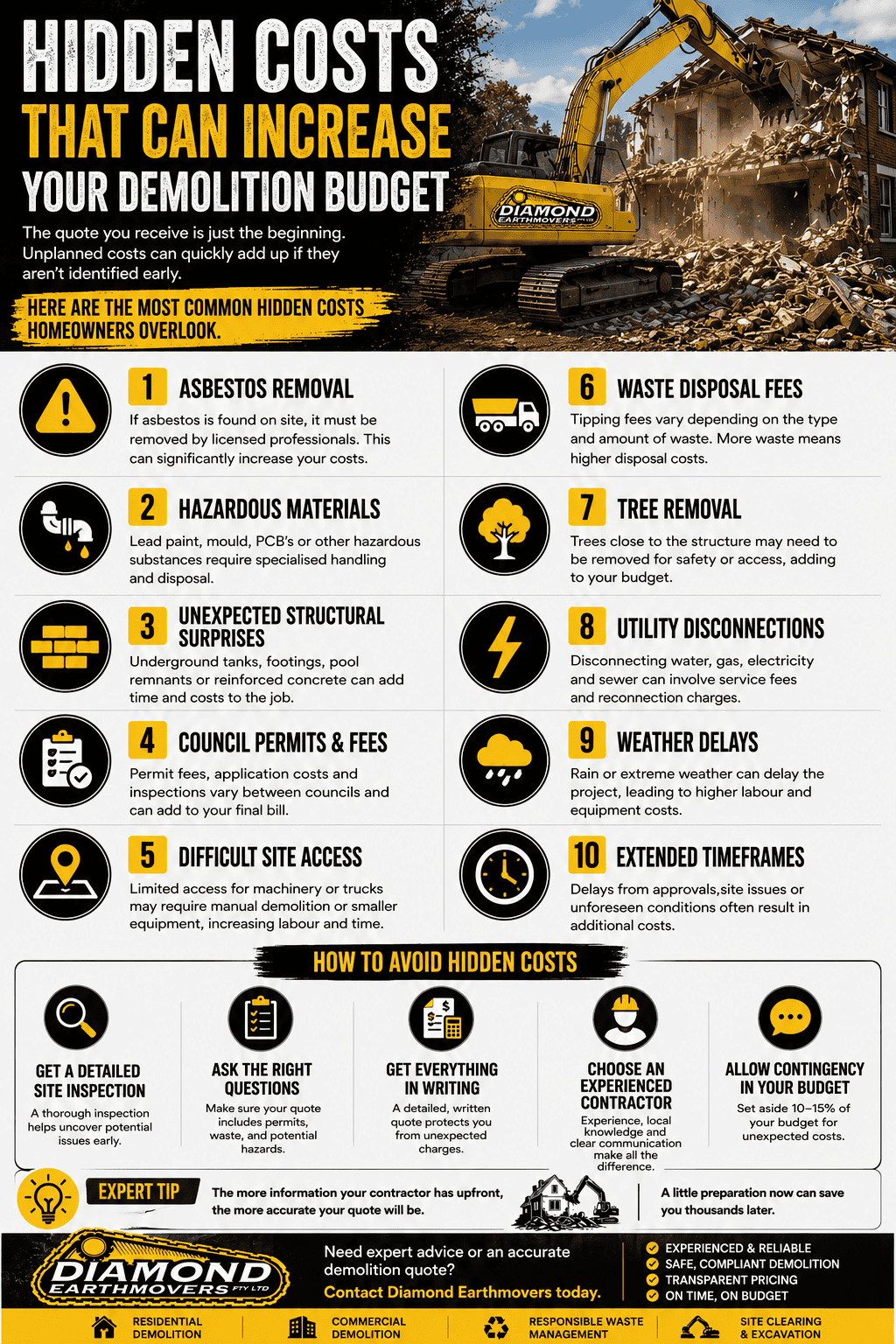
Not every unforeseen issue can be avoided, but there’s plenty you can do to minimise the risk. Reviewing our demolition quote checklist before you accept any quotation is a good place to start, alongside our broader guide on how to save money on house demolition without cutting corners.
Arranging a thorough site inspection matters more than most people expect. It lets the contractor assess access, structures, and visible site conditions before preparing a detailed quotation, and the more information gathered upfront, the fewer surprises later.
Being upfront about your property helps just as much. Share everything you know, including previous renovations, extensions, underground tanks, and retaining walls, since accurate information helps your contractor prepare a more reliable quote from the start. Leaving out these details is one of the common mistakes homeowners make before requesting a demolition quote.
It also pays to review the quote carefully before accepting it. Check exactly what’s included and what isn’t, looking closely at waste removal, site clean-up, permit assistance, utility disconnections, and how variations are handled. A transparent quote makes comparing contractors much easier.
Finally, choose experience over price alone. A low quote can be tempting, but experienced contractors tend to identify potential risks before work even begins. That proactive approach reduces unexpected variations and gives you far more confidence that the project has been assessed properly. Choosing a reputable contractor is often the single best way to protect your demolition budget.
Frequently Asked Questions

Are hidden demolition costs common?
Not necessarily. Most unexpected costs occur when unknown site conditions are discovered or when work outside the original scope becomes necessary. A detailed inspection and a transparent quotation help minimise these situations.
Can I avoid additional demolition expenses?
You can’t eliminate every unforeseen issue, but providing accurate property information, arranging a site inspection, and reviewing the quote carefully will significantly reduce the likelihood of unexpected costs.
Does every demolition quote include waste removal?
No. Many professional contractors include waste removal and disposal, but you should always confirm exactly what’s covered before accepting a quote.
Will Diamond Earthmovers explain potential additional costs upfront?
Yes. We explain any foreseeable risks during the quoting process and identify where variations may occur if unknown site conditions are discovered.
Should I budget extra for demolition?
It’s generally wise to build a contingency into your overall construction budget. That way, you’ve got peace of mind if unforeseen site conditions call for additional work during demolition.
What’s the best way to avoid surprise costs on my demolition project?
Choose an experienced contractor, insist on a proper site inspection, and be as forthcoming as possible about your property’s history. Together, these steps remove most of the guesswork from the quoting process.
Related Reading
- What Should Be Included in a Demolition Quote?
- Why Some Melbourne Homes Cost More to Demolish Than Others
- How to Save Money on House Demolition Without Cutting Corners
- Common Mistakes Homeowners Make Before Requesting a Demolition Quote
Plan Your Demolition Budget with Confidence
Knowing about potential hidden costs before demolition begins helps you make informed decisions and steer clear of unnecessary financial surprises.
At Diamond Earthmovers, we believe in providing transparent, comprehensive demolition quotes that clearly explain what’s included and flag any foreseeable considerations from the outset. Our experienced team takes the time to inspect every site thoroughly, so homeowners get practical advice and realistic expectations before work begins.
Whether you’re planning a complete house demolition or preparing your property for a knockdown rebuild, we’re here to help you budget with confidence.
Contact Diamond Earthmovers today to arrange a professional site inspection and receive a detailed demolition quote tailored to your Melbourne property.