Did you know that nearly 46% of embankment dam failures worldwide are caused by “piping,” a process where seepage carries soil particles directly through your wall? For Victorian property owners, this hidden risk often turns a major investment into a dry, cracked basin just as the summer heat peaks. It’s incredibly frustrating to watch your water security vanish because a contractor cut corners on soil compaction or ignored the specific clay requirements of our local landscape.
We understand that you want a leak-proof solution that stands up to the Victorian climate while staying on the right side of council permits. This guide will help you master the essentials of professional dam builds & repairs, ensuring your property has a reliable, long-term water supply. We’ll walk you through the critical engineering standards for our soil types, the current licensing requirements under the Water Act 1989, and how to ensure your project is built to last from the very first site cut.
Key Takeaways
- Navigate Victoria’s regulatory requirements by understanding the Water Act 1989 and the role of your local Catchment Management Authority.
- Master the engineering principles behind successful dam builds & repairs, including the critical role of keyways and precision soil compaction in preventing seepage.
- Learn to spot the early warning signs of structural failure and determine whether your existing dam requires a targeted repair or a complete rebuild.
- Optimise your dam’s design to serve multiple purposes, such as providing reliable irrigation and accessible water points for CFA fire tankers.
- Gain confidence in your project by understanding how professional site preparation and specialised machinery ensure a leak-proof, long-term water storage solution.
Planning Your Dam Build: Site Selection and Victoria’s Regulatory Landscape
Planning a dam on your Victorian property is a significant investment in your land’s future. It’s not just about moving dirt; it’s about understanding the legal and environmental framework that governs our state. Under the Water Act 1989, most private storages are classified as farm dams for stock and domestic use. However, if you intend to use that water for irrigation or commercial gain, you must secure a “take and use” licence first. Understanding these distinctions early prevents costly legal headaches later.
Success in professional dam builds & repairs starts with choosing the right spot. Site selection is the primary factor in how long your storage will last. We focus on building embankment dams that utilise the natural contours of your paddock. This approach reduces construction costs and ensures the dam fills efficiently during our often-unpredictable Victorian winters. You must also be aware of harvesting limits, as Victorian regulations ensure that water remains shared fairly across the catchment.
Navigating Victorian Permits and Council Rules
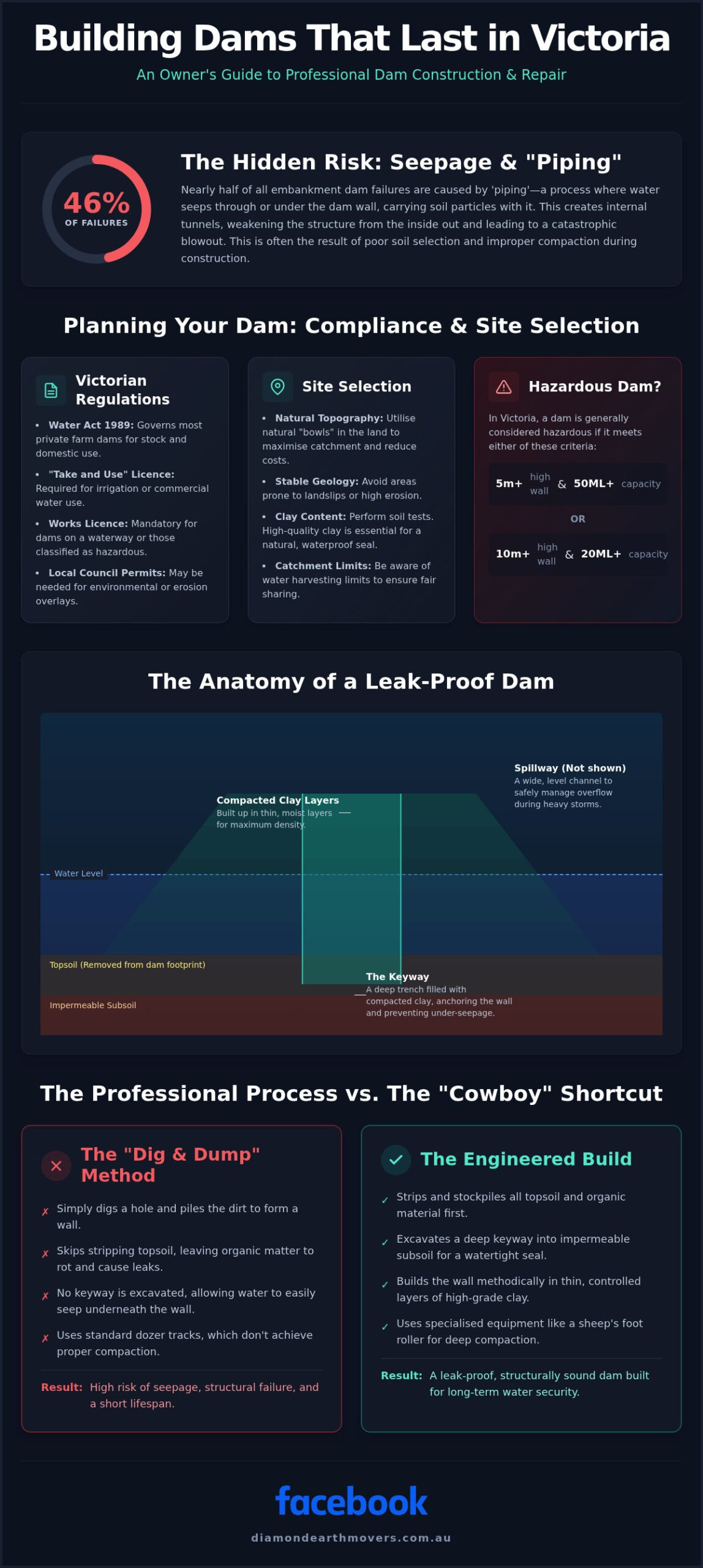
You’ll need to coordinate with authorities like Southern Rural Water or Goulburn-Murray Water to ensure your project is compliant. A works licence is mandatory if you’re constructing a dam on a waterway or if the structure is considered potentially hazardous. In Victoria, a dam is typically hazardous if the wall is 5 metres or higher with a 50-megalitre capacity, or 10 metres high with a 20-megalitre capacity. Your local council may also require a planning permit, particularly if your property is subject to environmental or erosion overlays. Getting the paperwork right at the start protects you from future liability and unexpected fines.
Evaluating Your Property’s Topography
Topography and soil are the two pillars of a leak-proof dam. We look for natural “bowls” in the land to maximise catchment without over-engineering the walls. Before we dig, we perform soil tests, specifically the clay ribbon test. If the soil doesn’t have enough clay to form a strong, flexible ribbon, it won’t create a reliable seal without expensive liners. We also steer clear of geologically unstable zones. Building on a site prone to landslips or high erosion is a risk we won’t take. By choosing a stable site with high-quality clay for our dam builds & repairs, we ensure your storage remains a permanent asset rather than a constant maintenance burden.
The Engineering of a Reliable Dam: From Clay Liners to Compaction
A common mistake property owners make is hiring a “cowboy” operator who simply digs a hole and dumps the dirt in a pile to form a wall. This “dig and dump” approach is the fastest way to a failing structure. High-quality dam builds & repairs require a methodical engineering process that treats the soil as a building material rather than just waste. At Diamond Earthmovers, we treat every embankment as a precision project, ensuring the wall is anchored deep into the ground to prevent the water from simply pushing the structure aside.
The invisible heart of any successful dam is the keyway. This is a deep trench excavated along the centreline of the wall, reaching down into the impermeable subsoil. We backfill this trench with high-grade clay and compact it thoroughly. This creates a watertight plug that prevents seepage from travelling under the wall, which is the leading cause of sudden blowouts. If you’re concerned about an existing structure, our team can assess if the original keyway was insufficient during our dam repair consultations.
The Step-by-Step Construction Process
We start by stripping the topsoil and organic matter from the entire footprint. This material is stockpiled away from the site because organic matter rots over time, creating air pockets that lead to leaks. Once the site is clean, we excavate the key trench. We then begin the process of layering. We place clay in thin, consistent layers, ensuring each one is bonded to the previous one. This methodical build-up continues until the wall reaches its designed height, followed by the construction of a wide, level spillway to manage overflow during heavy Victorian storms.
Compaction Standards and Equipment
Standard excavators or dozers aren’t enough for proper compaction. Their tracks are designed to spread weight, not concentrate it. We use a sheep’s foot roller, which features metal “teeth” that penetrate the soil to knit the layers together. Achieving the correct moisture content is vital; if the clay is too dry, it won’t bond, and if it’s too wet, it will turn to mush. Compaction lifts are the secret to dam structural integrity, involving the placement of thin soil layers that are individually compressed to create a dense, impermeable barrier. This precision ensures your dam builds & repairs result in a structure that holds water for decades, not just until the next dry spell.
Troubleshooting and Repairing Leaking or Silted Dams
Watching your water levels drop during a scorching Victorian summer is more than just a nuisance; it’s a threat to your property’s viability. Identifying whether the loss is due to evaporation or a structural fault is the first step in effective dam builds & repairs. While some leaks are obvious, others are subtle and occur deep within the embankment. Catching these issues before they turn into a total wall failure saves you time and protects your downstream neighbours.
Deciding whether to repair or rebuild depends on the severity of the structural damage. If a dam wall has suffered major slumping or widespread internal erosion, a complete rebuild is often the most sensible long-term choice. However, many dams can be salvaged through surgical earthworks that target specific failure points without the need for a total site overhaul. We focus on finding the most direct path to water security, whether that’s a patch or a full reconstruction.
Piping is the leading cause of sudden dam failure, accounting for roughly 46% of all embankment dam failures globally. This process occurs when water creates internal tunnels through the wall, washing away soil particles until the structure collapses. Silt buildup is another silent capacity killer. Over decades, runoff carries topsoil into your storage, reducing its megalitre volume and turning clear water into a muddy mess. Removing this silt not only restores your water capacity but also improves the health of your livestock by providing cleaner drinking water.
Diagnostic Checklist for Leaking Dams
Start your inspection at the downstream toe, which is the very bottom of the back of the dam wall. If you see wet spots, boggy ground, or “boils” where water is bubbling up, you have a leak. Look for dispersive soils, often called sodic soils, which can melt away when they get wet. These soils lack the internal structure to resist water pressure and require specialised treatment. You should also check for cracking on the crest and signs of erosion on the spillway, as these often signal that the wall is shifting or that the overflow isn’t handling heavy rain safely.
Professional Repair Techniques
When we tackle a leak, we often use sodium bentonite, a natural clay that expands when wet to plug small gaps in the soil structure. For more serious structural leaks, we may need to re-key the wall. This involves excavating a section of the existing embankment to reach the failure point and then rebuilding it with fresh, compacted clay. In some cases, we install internal filters or drainage systems. These allow water to pass through safely without taking soil with it, stabilising the pressure inside the wall. These methods ensure your dam builds & repairs provide a permanent fix rather than a temporary patch.
Large-Scale Rural Water Solutions: From Irrigation to Fire Safety
A dam is often the hardest-working asset on a Victorian farm. Beyond simple storage, it acts as a critical hub for livestock health, crop irrigation, and property protection. When we approach dam builds & repairs, we look at the big picture. This means designing a system that provides consistent pressure for irrigation while maintaining a “static water supply” for fire emergencies. In regions prone to bushfires, having a dedicated, accessible water point for CFA tankers isn’t just a good idea; it’s a vital safety measure that can protect your home and livelihood.
Integrating your water storage with the rest of your property’s layout increases efficiency. We can design “living dams” that incorporate native vegetation to filter runoff and support local biodiversity. This adds significant aesthetic value and can boost your property’s market price. By planning for both function and form, your dam becomes a feature of the landscape rather than just a utility. It transforms a muddy hole into a thriving ecosystem that serves your family for generations.
Dams for Equestrian Properties
Equestrian sites have unique water management needs. Large-scale riding arenas and yards create significant runoff that needs to be directed away from the sand and towards storage. We often position dams to capture this flow, preventing paddocks from becoming bogs. To keep your horses safe, we design gradual entry points or use rock retaining walls to stabilise steep banks near facilities. This prevents stock from damaging the structural integrity of the wall and keeps the water cleaner for drinking. Our experience with horse riding arenas allows us to create a seamless link between your riding facilities and your water supply.
Infrastructure Integration
Your dam shouldn’t exist in isolation. We often build driveways and access roads that double as catchment diversions, funnelling rain directly into your storage. This is a smart way to manage the water balance across your entire Victorian property. We also assist with the installation of pipes and troughs for off-stream watering. This keeps livestock away from the dam edges, which reduces erosion and prevents the “piping” issues mentioned earlier. Managing the water balance involves more than just catching rain; it’s about how that water moves through your land. If you’re ready to upgrade your property’s water infrastructure, you can book an on-site consultation with Diamond Earthmovers to discuss a custom solution.
Why Diamond Earthmovers is Victoria’s Trusted Choice for Dam Works
When you choose Diamond Earthmovers for your dam builds & repairs, you aren’t just hiring a fleet of machines. You’re partnering with a family team that understands the Victorian landscape. Steve, Jayden, and Claire bring a personal level of accountability to every site across Melbourne and regional Victoria. We’ve spent years building a reputation based on results rather than flashy marketing. This means we don’t take shortcuts on compaction or site preparation because we know our name is attached to the longevity of your water storage. Our team understands that a dam is a permanent fixture of your land, and we treat it with the respect that responsibility deserves.
Our fleet includes specialised, high-tonnage excavators and we provide precision grader hire Melbourne for projects that demand perfect levels and drainage. Having the right tools for the job allows us to work efficiently while maintaining the strict engineering standards required for leak-proof structures. We take pride in our methodical approach, ensuring that every layer of soil is compacted to the highest density before moving to the next. This dedication to quality ensures that the work we do today will still be serving your property decades from now.
The Family-Owned Advantage
Dealing with a family-owned business means you get a level of transparency that’s often missing with larger, faceless contractors. You’ll speak directly with the people who are actually operating the machines and managing the site. This direct line of communication ensures that your specific goals for the property are met without anything getting lost in translation. We’re part of the local community, and our reputation is built on the word-of-mouth referrals from satisfied Victorian landowners who trust us with their most valuable assets. We provide honest, upfront quoting for all bulk earthworks, ensuring you have a clear understanding of the project scope from the very beginning.
Comprehensive Site Solutions
Our capabilities extend far beyond water storage. We offer a holistic approach to property development, providing expert demolition Victoria for old structures and building robust driveways & access roads that stand up to heavy farm machinery. If you are an equestrian enthusiast, we specialise in creating custom horse riding arenas and yards that integrate perfectly with your property’s drainage and topography. By managing multiple aspects of your project, we ensure a cohesive result where the dam, the roads, and the facilities all work together. If you’re ready to secure your property’s water future, contact Diamond Earthmovers for a site consultation and let us help you build a more functional and resilient property.
Securing Your Property’s Water Future
A well-constructed dam is one of the most valuable assets you can add to your Victorian property. By focusing on correct site selection, navigating the local regulatory landscape, and insisting on professional-grade compaction, you’re investing in a storage solution that will serve your land for decades. Whether you’re designing for livestock health or ensuring your family has a reliable water source for fire protection, the quality of the earthworks makes all the difference. Professional dam builds & repairs aren’t just about moving dirt; they’re about engineering security into the very foundation of your property.
At Diamond Earthmovers, we’re proud to be a family owned and operated business that specialises in Victorian clay compaction and rural earthworks. Our fully insured operators use professional-grade machinery to ensure every project meets our exacting standards. We’re here to help you move from a leaking basin to a thriving, leak-proof storage hub. If you’re ready to start your next project with a team you can trust, Get an Expert Quote for Your Dam Project today. We look forward to helping you build a more resilient and productive property.
Frequently Asked Questions
Do I need a permit to build a dam on my property in Victoria?
Yes, you generally need a works licence or planning permit from your local water authority or council. Under the Water Act 1989, authorities like Melbourne Water or Southern Rural Water regulate construction on waterways or for potentially hazardous structures. Even for small farm dams, checking with your Catchment Management Authority is a vital first step. We recommend confirming these details before starting any earthworks to ensure your project remains fully compliant with Victorian water regulations.
How much does it cost to build a new farm dam in Melbourne?
The total investment for a new farm dam depends on factors like the storage capacity in megalitres, soil quality, and site accessibility. Because Victorian soil types vary significantly, we provide custom quotes based on an on-site inspection. This allows us to assess the specific excavation and compaction requirements of your land. By tailoring the design to your property’s topography, we ensure you get a reliable storage solution that provides long-term value without hidden costs.
Why is my dam leaking even though it’s full of clay?
A dam can leak despite high clay content if the soil wasn’t compacted in thin lifts or if the keyway is insufficient. Clay must be placed at the correct moisture level and compressed with specialised equipment like a sheep’s foot roller to create a waterproof seal. If the clay is just “dumped,” water will eventually find a path through the wall. Our expertise in dam builds & repairs focuses on these engineering details to prevent seepage and structural failure.
Can you fix a dam without draining all the water first?
Minor leaks can sometimes be treated with sodium bentonite while the dam is full, but structural repairs usually require the water level to be lowered. To properly re-key a wall or fix internal erosion like “piping,” we need direct access to the dry soil. This allows our operators to excavate the failure point and compact fresh clay correctly. Attempting a structural fix under water often results in a temporary patch rather than a permanent solution for your dam builds & repairs.
What is the best time of year for dam construction in Victoria?
Late spring through to early autumn is the ideal window for dam construction in Melbourne and surrounding regions. During these months, the ground is generally dry enough for our heavy machinery to operate efficiently and achieve the necessary soil compaction. Building during the wet Victorian winter is difficult because excessive moisture prevents the clay from bonding properly. Planning your project for the warmer months ensures the structural integrity and long-term reliability of your new water storage.
How long does a professional dam build typically take?
A professional dam build typically takes between one and three weeks, though this timeframe varies based on the megalitre capacity and site complexity. A standard five-megalitre stock dam involves several days of site preparation, followed by the methodical layering and compaction of the embankment wall. We move at a deliberate pace to ensure every stage, from the initial site cut to the final grading of the spillway, meets our high standards for safety and precision.
Do you provide grader hire for dam spillways and access roads?
Yes, we provide professional grader hire Melbourne to ensure your dam spillways and access roads are finished to a high standard. A grader is essential for creating the precise levels needed to direct runoff into your catchment and manage overflow safely during heavy storms. We often integrate these services into our larger projects, ensuring that your property’s infrastructure, including driveways and arena sites, works seamlessly with your new water storage and property drainage.
Can a dam be built on a steep slope?
Dams can be built on sloping ground, but they require careful engineering to manage the increased water pressure and potential for wall slumping. On steeper Victorian properties, we may incorporate rock retaining walls to stabilise the site or design a larger embankment to ensure safety. It’s crucial to analyse the natural drainage lines and soil stability before digging. Our team assesses these factors during the planning phase to determine the safest and most effective design for your land.