How Long Does House Demolition Take in Melbourne? (Modern Guide)
It’s usually not as fast—or as slow—as people expect
When you first think about demolition, the timeline isn’t always clear.
Some people assume it takes weeks. Others think it can be done in a day.
The reality sits somewhere in between.
Because while the physical demolition can be quick, the full process takes longer than most people expect.
Why the timeline isn’t just about demolition day
When people ask how long demolition takes, they’re usually thinking about the moment the house comes down.
But that’s only one part of the timeline.
The actual process includes approvals, inspections, preparation, and final site clearing.
And in most cases, those stages take longer than the demolition itself.
What the full demolition timeline usually looks like
For a typical residential demolition in Melbourne, the full process can take anywhere from a few weeks to over a month.
The demolition itself may only take a few days.
But everything leading up to it—and everything that follows—adds time to the overall schedule.
That’s where most of the variation comes from.
The stage that takes the longest
For most projects, approvals are the slowest part.
Permit applications, council reviews, and any required documentation can take time to process.
Some approvals move through quickly. Others take longer, especially if additional checks are needed.
This is why the timeline often depends more on paperwork than on physical work.
What happens before demolition begins
Before anything can happen on site, a number of steps need to be completed.
The property needs to be assessed. Hazardous materials need to be identified. Utilities need to be disconnected.
These steps don’t always take long individually, but together they form a critical part of the timeline.
And none of them can be skipped.
How long the demolition itself takes
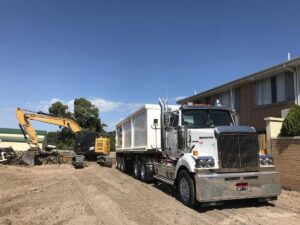
Once everything is approved and prepared, the physical demolition is usually the fastest part.
For most residential homes, the structure can be brought down within one to three days.
Larger or more complex properties may take longer, but the process is generally quick once it begins.
This is the stage most people picture—but it’s not the stage that defines the timeline.
What happens after the house is removed
After demolition, the site still needs to be cleared.
Debris must be removed. Materials need to be sorted and disposed of. The land needs to be left in a condition that’s ready for the next phase.
Depending on the project, this can take several more days.
And like the earlier stages, it’s an essential part of the overall process.
What can delay a demolition project
Delays don’t usually happen during demolition.
They happen before it starts.
Permit approvals can take longer than expected. Additional documentation may be required. Site conditions might reveal issues that weren’t initially visible.
Weather can also play a role, particularly when site access or safety becomes a concern.
Each of these factors can extend the timeline.
Why some projects move faster than others
From the outside, two demolition projects might look similar.
But timelines can vary depending on access, approvals, property condition, and how well the project is planned.
A straightforward site with clear approvals and no complications can move quickly.
A more complex property may require additional time at multiple stages.
This is why timelines are rarely identical.
How to keep your demolition timeline on track

This is where expectations and reality can start to separate.
Initial quotes are usually based on straightforward assumptions. But once work begins, additional factors often emerge.
Unexpected materials, access limitations, waste removal challenges, and additional labour can all influence the final cost.
These variables are common—but they explain why similar projects can end up with very different outcomes.
The difference between a smooth timeline and a delayed one
Demolition timelines don’t usually slip without reason.
They extend when steps are rushed, when details are missed, or when unexpected factors aren’t accounted for early.
Most of the time, the timeline is shaped before demolition even begins.
And the more preparation that’s done upfront, the smoother the process tends to be.
If you’re planning a demolition in Melbourne
Understanding the timeline helps set realistic expectations.
It also allows you to plan the next stage of your project with more confidence.
The key is to look at the full process—not just the demolition day.
Because that’s what determines how long it really takes.
Frequently Asked Questions

Frequently Asked Questions
How long does it take to demolish a house in Melbourne?
The physical demolition usually takes one to three days. The full process, including approvals and preparation, can take several weeks.
What is the longest part of the demolition process?
Permit approvals are often the most time-consuming stage, especially if additional documentation or checks are required.
Can demolition be completed in one day?
In some cases, yes. Smaller or straightforward homes can be demolished within a day, but preparation and cleanup still take additional time.
What can delay a demolition project?
Common delays include permit approvals, site conditions, weather, and unexpected findings during inspections.
When can construction start after demolition?
Once the site is cleared and ready, construction can begin. The exact timing depends on site conditions and the next phase of the project.
Need help managing your demolition timeline?
Diamond Earthmovers works with homeowners to plan and manage demolition projects from start to finish.
Getting the timeline right early helps keep everything else on track.
Continue reading
Now that timelines are clear, the next step is avoiding common mistakes.
See Article 5: Common House Demolition Mistakes (And How to Avoid Them)