How to Manage Demolition Disruption in Melbourne Suburbs Worried About Noise, Dust and Neighbours?
When people think about demolition, they don’t just worry about the building coming down. They worry about everything around it – the neighbours, the noise, the dust, the traffic and whether the street is going to hate them by the end of the job.
That’s completely understandable. Most demolitions in Melbourne happen in built-up suburbs, not on empty blocks. You’re surrounded by homes, driveways, footpaths and everyday life. The good news is that with the right planning and communication, demolition doesn’t have to turn into a neighbourhood drama.
At Diamond Earthmovers, we take disruption seriously. We can’t make demolition silent and invisible, but we can keep it organised, predictable and respectful.
How Noisy Is Demolition Really – and When Does It Happen?
Demolition is noisy by nature. Excavators, trucks, concrete breaking and loading rubble all create sound. The key is when and how that noise happens.
We work within agreed working hours – typically standard construction times – so you don’t have machinery starting at dawn or going late into the evening. Most of the heaviest noise happens in stages: taking the structure down, breaking concrete, and loading trucks. Between those times there are quieter periods where we’re sorting materials, moving machinery or tidying the site.
By planning the work in a structured way, we avoid random bursts of activity at strange hours. Neighbours may not love the noise, but they can at least see that it’s happening in a controlled, time-limited way and not dragging on indefinitely.
What Can Be Done About Dust?
Dust is a natural by-product of demolition, especially when old bricks, mortar and plaster are being broken up. That doesn’t mean it should be left unchecked.
On site, we look at the weather, the materials and the distance to neighbouring properties. Where practical, we use methods such as wetting down certain areas to help keep dust down, particularly during concrete breaking and loading. We’re also mindful of wind direction and try to stage dusty tasks when conditions are least likely to push everything across a neighbour’s yard or outdoor area.
You can help by letting us know if there are particular sensitivities – for example, a neighbour with outdoor entertaining right on the boundary, or a property with a pool very close to the work area. With that knowledge, we can take extra care in those directions.
The aim is not to promise “no dust at all” – that wouldn’t be honest – but to manage it so it’s reduced as much as reasonably possible.
How Are Neighbours Kept Safe Around the Site?
Safety for neighbours, pedestrians and anyone passing by is non-negotiable.
Before demolition begins, fencing is put in place so the site is clearly separated from public areas. This helps keep children, pets and curious onlookers out of harm’s way. Signage is used where necessary to warn about heavy vehicles or restricted zones.
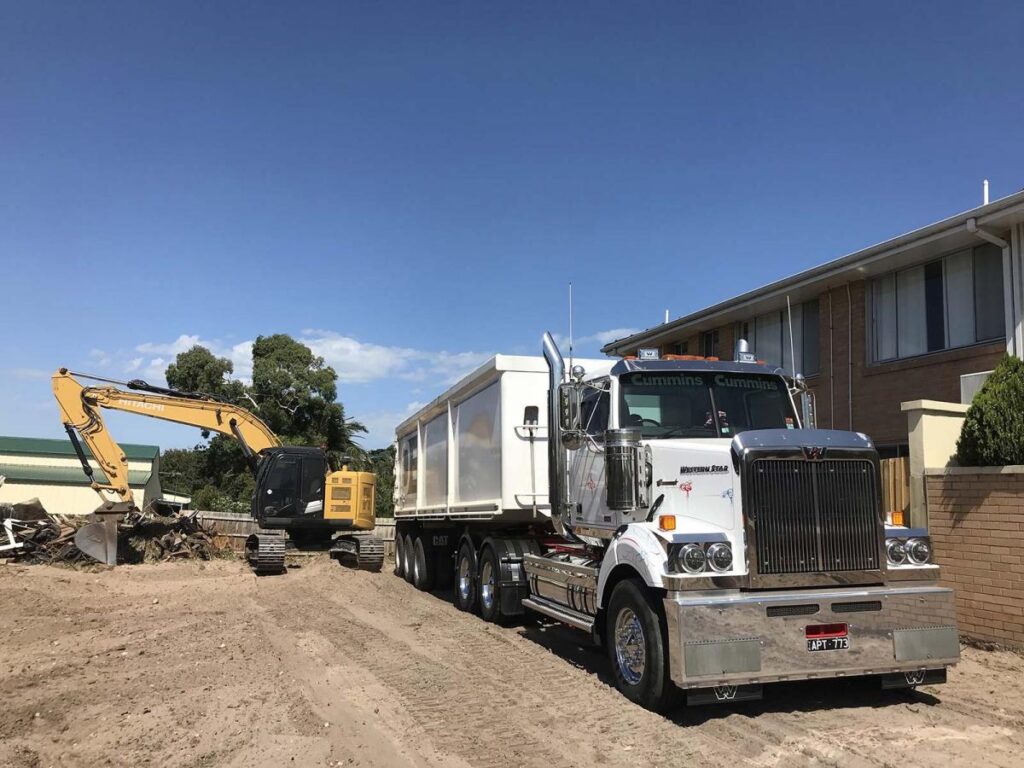
We also pay close attention to how machinery moves on and off the property. On tight Melbourne streets, an excavator or truck pulling in and out needs to do so in a controlled way. Our operators are experienced in working in these conditions and understand they’re operating around homes, not on an isolated construction yard.
From your perspective as the owner, you can feel confident that the work is not just happening behind a token bit of tape. The site is treated as a proper work zone with the safety measures to match.
How Should You Communicate with Your Neighbours?
You don’t need to run a public relations campaign, but a simple, friendly heads-up goes a long way.
Letting immediate neighbours know the demolition dates and roughly what to expect is often enough to ease most concerns. You can explain that:
- The work is being carried out by a professional demolition company
- There are permits and safety measures in place
- The aim is to get in, do the job properly, and leave the site clean and secure
If any neighbours have specific worries – about access, parking or noise – it’s better that they raise them before the excavator arrives, rather than in the middle of the job. We’re happy to factor reasonable requests into our planning where we can.
From our side, we stick to agreed hours, keep the site tidy, and manage truck movements so the street doesn’t feel blocked or chaotic.
What About Parking, Traffic and Tight Streets?
Many Melbourne demolitions happen in streets where parking is already at a premium and driveways are close together. That’s why we think about traffic and parking long before the first truck shows up.
We look at where trucks can safely park for loading, how they’ll turn, and which driveways must be kept clear at all times. Where possible, we keep vehicles on your side of the street or within the property boundary, so we’re not constantly blocking neighbours in.
If there are particular constraints – a school nearby, very narrow roads, or a difficult corner – we build that into the schedule and truck movements. The goal is to move material off site efficiently without turning the whole street into a car park.
You don’t need to stand out front directing traffic. That’s our job. But if you know of regular patterns – like bin days or school pickup times – sharing that with us helps us plan around them.
How Long Does the Disruption Usually Last?
Most standard house demolitions are relatively short, intense bursts of activity rather than months of low-level disruption.
The exact duration depends on the size and complexity of the job, but typically the main noisy and dusty stages happen over a clearly defined period. Once the structure is down, concrete is broken and rubble is removed, the site becomes much quieter. What’s left is levelling, tidying and final checks.
We don’t drag demolition out longer than necessary. Time on site costs you money and keeps everyone living with disruption. Our aim is to plan well, work efficiently and finish with a clean, safe site so your builder can move in and the street can get back to normal.
How Does Diamond Earthmovers Reduce Stress for Everyone Involved?
For us, managing disruption isn’t an extra service – it’s part of doing the job properly.
We start with realistic conversations. We don’t pretend there will be no noise, dust or movement. Instead, we explain what will happen, when it will happen and how we’ll control it. We work within normal construction hours, keep our sites fenced and tidy, and make sure machinery and trucks are operated by experienced people who understand they’re working in a neighbourhood, not a quarry.
We also keep you informed. If something changes – a schedule shift, a weather issue, or an unexpected condition on site – we let you know rather than leaving you to answer neighbour questions without information.
When demolition disruption is managed well, most neighbours accept it as a short-term inconvenience on the way to an improved property, not a problem that drags on.
If you’re worried that demolition will upset your street or create more stress than it’s worth, Diamond Earthmovers can talk you through what to expect and how we handle noise, dust and neighbours on Melbourne projects just like yours.
📍 Next in this series:
You can revisit Blog 8 – “What About the Mess? How Demolition Waste, Recycling and Rubble Are Managed” if you’d like to see how we deal with the physical side of demolition once the building is down.Then move on to Blog 10 – “Choosing a Demolition Contractor in Melbourne: Questions to Ask Before You Say Yes” to learn what to look for in a demolition company so you know your project – and your neighbourhood – are in safe hands.